Betting Odds Explained: How Do Betting Odds Work?
By the MyHorseBets team · Updated · 14 min read
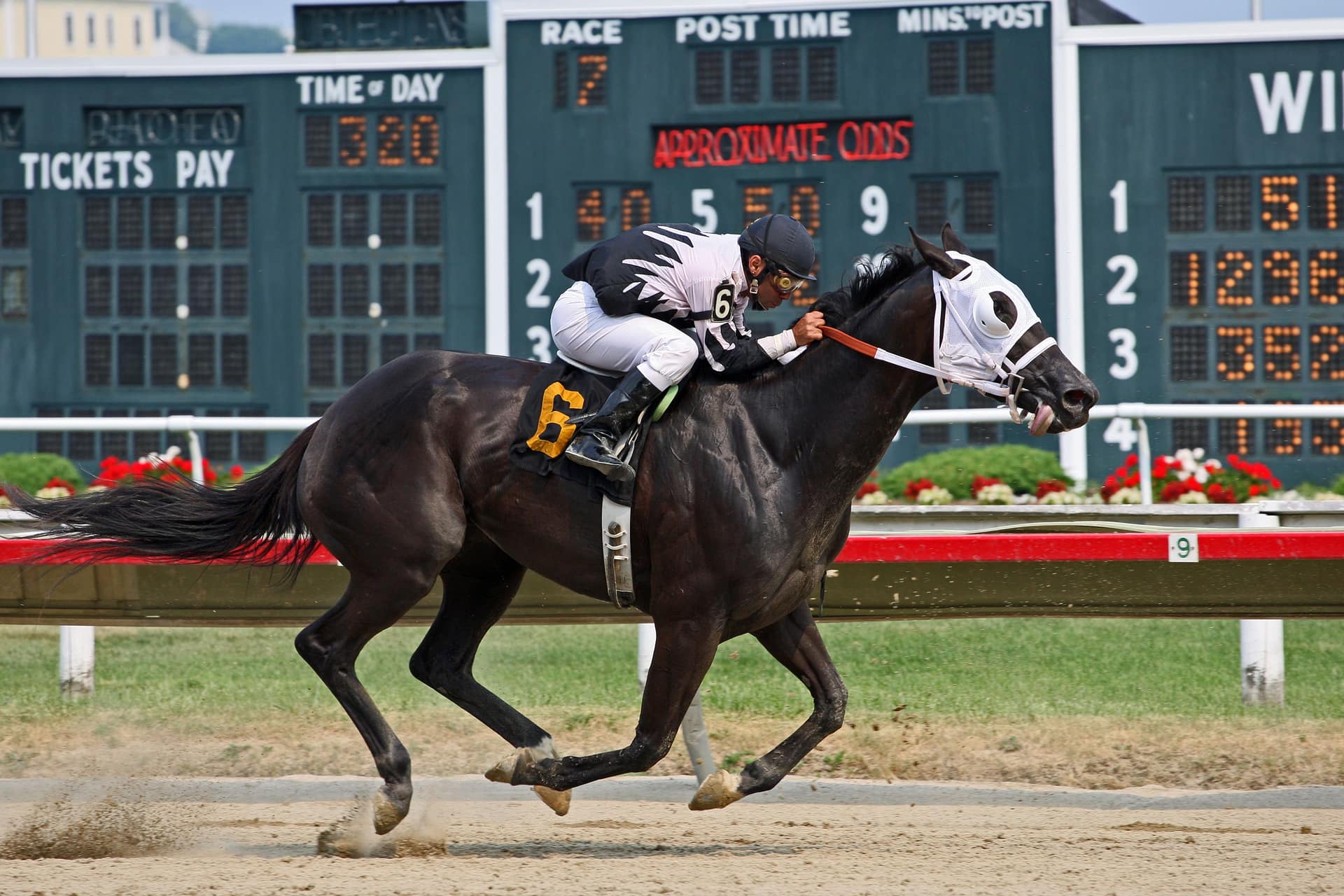
Betting odds explained in one line: odds tell you how much you win for every pound you stake, and how likely the bookmaker thinks the outcome is. At 2/1 you win £2 for every £1 staked and get your £1 back, so £10 returns £30. Arena Racing Company’s guide to betting puts it simply: “odds tell you how likely that horse is to win, and how much money you will get back if you bet on it.”
This guide covers the three formats you will meet (fractional, decimal and American), the formula for working out any return, what odds on, odds against and evens mean, and how bookmakers build a margin into their prices. There is a full table of common prices with the decimal equivalent, implied probability and the return on a £10 stake, so you can check any price at a glance.
Betting Odds Explained: The Three Formats
The same price can be written three ways. Which one you see depends on where you bet and which setting your betting app uses. Wikipedia’s article on fixed-odds betting notes that fractional odds are “most common in the United Kingdom and Ireland and common worldwide in horse racing”, decimal odds are most common in Continental Europe, Australia, New Zealand and Canada, and moneyline odds “are most commonly used by United States bookmakers”.
Fractional Odds
Fractional odds are the traditional British format: 5/2, 9/4, 100/1. Arena Racing Company’s guide explains that “the first part refers to how much you could win, the second part refers to how much you bet.” So 5/2 means you win £5 for every £2 you stake. Fractional odds show the profit only. Your stake comes back on top.
Decimal Odds
Decimal odds show a single number, such as 3.50. Arena Racing Company’s guide explains that you multiply that number by your stake to see how much you get back in total. The key word is total: decimal odds include the stake. £10 at 3.50 returns £35, of which £25 is profit. That makes decimal odds the quickest format for working out a return.
American Odds
American odds (also called moneyline or US odds) use a plus or minus sign. According to the Wikipedia article on odds, a positive figure “indicates the net winnings for a $100 wager”, and a negative figure shows how much must be staked for net winnings of $100. So +450 is the same price as 9/2 (a $100 stake wins $450), and minus 200 is the same as 1/2 (you stake $200 to win $100). UK punters mostly meet them on American sports markets, and our odds converter turns them into fractional or decimal in one step.
How Do Betting Odds Work?
Whatever the format, every price answers two questions: how much does a winning bet pay, and how likely does the bookmaker think the outcome is? William Hill’s guide to betting odds says “the odds are calculated by the bookmaker. They will estimate the probability of an event taking place and based on their prediction, will display odds.” Shorter odds mean the bookmaker rates the outcome more likely and pays less; longer odds mean the opposite.
How to Read Betting Odds
Read fractional odds as “this much to win for that much staked”. 7/2 is “seven to two”: stake £2, win £7. 11/8 is “eleven to eight”: stake £8, win £11. You don’t have to bet in those exact amounts; the ratio scales to any stake. Arena Racing Company’s guide adds a handy rule of thumb: smaller numbers such as 2/1 or 3/1 point to a horse that is likely to win, larger ones such as 10/1 or 33/1 to one that is less likely, and when the second number is bigger (2/9, 4/11) the horse is strongly fancied.
Returns vs Winnings
Two words get mixed up all the time. Winnings (or profit) is what you gain on top of your stake. Returns are winnings plus the stake you get back. A £10 bet at 3/1 has £30 winnings and a £40 return. Decimal odds give you the return directly; fractional odds give you the winnings. Keep that difference in mind and you will never misread a price.
What Does 2/1 Mean?
2/1 (“two to one”) means you win £2 for every £1 you stake. At £10, that is £20 winnings plus your £10 back, a £30 return. In decimal that is 3.00, and the implied probability is one in three, or 33.3%. If you have wondered how do odds work in the simplest possible case, 2/1 is the one to remember: double your stake as profit.
How to Calculate Betting Odds
You don’t need a calculator for most single bets, just one short formula. Our odds calculator does the sums for you, but it helps to know what it is doing.
The Formula for Fractional Odds
For fractional odds written as A/B:
- Winnings = stake x A / B
- Return = winnings + stake
- Decimal odds = A / B + 1
- Implied probability = B / (A + B)
Take 7/2 as an example. A £10 stake wins £10 x 7 / 2 = £35, and the return is £35 + £10 = £45. The decimal price is 7 / 2 + 1 = 4.50, and the implied probability is 2 / (7 + 2) = 2 / 9 = 22.2%.
Calculating Returns From Decimal Odds
With decimal odds the sum is even shorter: return = stake x decimal odds, and winnings = return minus stake. £20 at 2.75 returns £20 x 2.75 = £55, which is £35 profit. To turn a decimal price back into a fraction, subtract 1 and simplify: 2.75 minus 1 is 1.75, which is 7/4. 1.50 minus 1 is 0.50, which is 1/2.
Worked Examples: 7/2, 9/2, 4/6 and 7/1
| Bet | Working | Winnings | Return |
|---|---|---|---|
| £10 at 7/2 | £10 x 7 / 2 = £35 | £35.00 | £45.00 |
| £5 at 9/2 | £5 x 9 / 2 = £22.50 | £22.50 | £27.50 |
| £20 at 4/6 | £20 x 4 / 6 = £13.33 | £13.33 | £33.33 |
| £10 at 7/1 | £10 x 7 = £70 | £70.00 | £80.00 |
| £10 at 10/1 | £10 x 10 = £100 | £100.00 | £110.00 |
| £10 at 1.50 | £10 x 1.50 = £15 return | £5.00 | £15.00 |
The 4/6 line shows why odds-on prices need care: £20 x 4 is £80, divided by 6 is £13.333, which rounds to £13.33. Whenever the stake does not divide neatly by the second number, expect a figure that has to be rounded to the nearest penny.
Odds On, Odds Against and Evens
These three terms describe where a price sits relative to an even bet. They come up constantly in racing commentary and on bet slips, and they are the quickest way to judge a price before you do any maths.
What Does Odds On Mean?
Odds on means the first number in the fraction is smaller than the second: 1/2, 4/6, 4/5, 2/7. William Hill’s guide defines odds-on as “a scenario where the bookie thinks the event is likely to happen.” In practice your winnings are smaller than your stake. Wikipedia’s fixed-odds betting article gives the example of odds of 1/4, read as “four-to-one on”, where a £100 stake wins £25. So the odds on meaning, in plain terms, is this: an implied chance above 50%, and a decimal price below 2.00.
Odds Against
Odds against is the opposite: the first number is bigger than the second, as in 5/2, 4/1 or 33/1. William Hill’s guide describes it as the case where “the bookie thinks the event is more likely not to happen.” Your winnings are larger than your stake, the implied probability is below 50%, and the decimal price is above 2.00. In a typical race the favourite may be odds on, but the rest of the field will be odds against.
What Does Evens Mean in Betting?
Evens is 1/1, or 2.00 in decimal. Wikipedia’s article on odds says “odds of 1/1 are known as evens or even money”, and William Hill describes it as “a 50/50 bet” where “you would double your stake if placing a winning bet.” £10 at evens returns £20: £10 winnings plus the £10 stake. Evens is the dividing line between odds on and odds against.
Common Fractional Odds Table
This table shows the prices you will see most often on a racecard or bet slip. Decimal odds are rounded to two places, implied probability to one decimal place, and the £10 return includes the stake.
| Fractional | Decimal | Implied probability | Return on £10 |
|---|---|---|---|
| 1/5 | 1.20 | 83.3% | £12.00 |
| 1/4 | 1.25 | 80.0% | £12.50 |
| 2/5 | 1.40 | 71.4% | £14.00 |
| 1/2 | 1.50 | 66.7% | £15.00 |
| 4/6 | 1.67 | 60.0% | £16.67 |
| 4/5 | 1.80 | 55.6% | £18.00 |
| 10/11 | 1.91 | 52.4% | £19.09 |
| Evens (1/1) | 2.00 | 50.0% | £20.00 |
| 11/10 | 2.10 | 47.6% | £21.00 |
| 6/5 | 2.20 | 45.5% | £22.00 |
| 5/4 | 2.25 | 44.4% | £22.50 |
| 11/8 | 2.38 | 42.1% | £23.75 |
| 6/4 | 2.50 | 40.0% | £25.00 |
| 13/8 | 2.63 | 38.1% | £26.25 |
| 7/4 | 2.75 | 36.4% | £27.50 |
| 15/8 | 2.88 | 34.8% | £28.75 |
| 2/1 | 3.00 | 33.3% | £30.00 |
| 9/4 | 3.25 | 30.8% | £32.50 |
| 5/2 | 3.50 | 28.6% | £35.00 |
| 11/4 | 3.75 | 26.7% | £37.50 |
| 3/1 | 4.00 | 25.0% | £40.00 |
| 7/2 | 4.50 | 22.2% | £45.00 |
| 4/1 | 5.00 | 20.0% | £50.00 |
| 9/2 | 5.50 | 18.2% | £55.00 |
| 5/1 | 6.00 | 16.7% | £60.00 |
| 6/1 | 7.00 | 14.3% | £70.00 |
| 7/1 | 8.00 | 12.5% | £80.00 |
| 8/1 | 9.00 | 11.1% | £90.00 |
| 10/1 | 11.00 | 9.1% | £110.00 |
| 12/1 | 13.00 | 7.7% | £130.00 |
| 16/1 | 17.00 | 5.9% | £170.00 |
| 20/1 | 21.00 | 4.8% | £210.00 |
| 25/1 | 26.00 | 3.8% | £260.00 |
| 33/1 | 34.00 | 2.9% | £340.00 |
| 50/1 | 51.00 | 2.0% | £510.00 |
| 100/1 | 101.00 | 1.0% | £1,010.00 |
How to Read the Table
Find the price, then read across. 9/2 (often said as “nine to two”) is 5.50 in decimal, implies an 18.2% chance, and returns £55 from £10. For a stake other than £10, scale the last column: £5 returns half, £20 returns double. For prices not listed, such as 8/13 or 2/7, the odds converter gives the decimal and the implied probability calculator gives the percentage.
Which Is Better: 4/1 or 9/2?
9/2 is the bigger price. In decimal it is 5.50 against 5.00, so £10 at 9/2 returns £55 and £10 at 4/1 returns £50. The same goes for 5/2 against 3/1: 3/1 (4.00) is bigger than 5/2 (3.50), returning £40 instead of £35. If the fractions are awkward to compare, convert both to decimal and pick the higher number. On the same horse, the bigger price is always the better deal for you.
Is 100/1 Good Odds?
100/1 pays well if it wins: £10 returns £1,010. But the implied chance is about 1%, so the price says it should lose roughly 99 times in 100. Long odds are not “good” or “bad” on their own; a price only represents value if the true chance is higher than the price implies, and nobody can know that for certain. Big-field races such as the Grand National are where many punters first meet prices like 33/1, 50/1 and 100/1, so it is worth knowing what they really imply before you bet.
Odds and Probability: How Bookmakers Build a Price
Every price can be turned into a percentage, and that is the clearest way to see what the bookmaker is saying and how much it is keeping for itself.
Implied Probability
Implied probability is 1 divided by the decimal odds. 2.50 is 1 / 2.50 = 0.40, or 40%. For fractions, use B / (A + B): 6/4 is 4 / (6 + 4) = 40%, the same answer. This is the chance the price represents, not a guarantee and not the true chance; it already contains the bookmaker’s margin, as the next section shows.
Overround and the Bookmaker Margin
If a bookmaker priced every outcome at its true chance, the implied probabilities in a market would add up to exactly 100%. They don’t. Wikipedia’s fixed-odds betting article explains that “the sum of the probabilities quoted for all possible outcomes will be in excess of 100%. The excess over 100% (or overround) represents profit to the bookmaker in the event of a balanced/even book.” Its example adjusts three horses to 60%, 50% and 20%, a total of 130% and an overround of 30.
Working Out the Overround
Take a two-way market with both sides at 10/11. Each price implies 52.4% (more precisely 52.38%), so the book adds up to 104.76%, an overround of about 4.8%. At true odds both sides would be evens, 50% each.
A three-horse race priced 6/4, 2/1 and 5/2 works the same way: 40.00% + 33.33% + 28.57% = 101.90%, an overround of 1.9%. Real races have more runners, so you add up more prices, which the implied probability calculator mentioned above does in seconds. The lower the total, the fairer the market is to punters.
How Odds Work in Horse Racing
Racing uses all the same maths, with a few extra layers: prices move until the off, bets can be settled at a fixed price or the starting price, and each way and multiple bets combine more than one price.
Fixed Price vs Starting Price
When you bet on a horse you usually choose between taking the price on offer and taking the starting price (SP). Sky Bet’s horse racing rules say that with SP, “whatever odds your selection is at the start of the race are the odds you will receive for your bet”, while betting at anything other than SP means settlement “calculated from the price taken at time of placement”. Take 6/1 in the morning and you are paid at 6/1 even if the horse starts at 4/1. Our guide to what SP means in horse racing covers how the SP is returned and when each option makes sense.
Each Way Odds
An each way bet is a win bet plus a place bet, and the place part pays a fraction of the win odds set by the place terms on the slip. At 1/5 the odds, a 10/1 shot pays 2/1 for a place, so £5 on the place part returns £15. Our each way calculator works out both halves, and the guide to what an each way bet is explains the place terms.
Odds in Doubles and Accumulators
In a multiple, you multiply the decimal odds of each selection. A £5 double at 2/1 (3.00) and 6/4 (2.50) returns £5 x 3.00 x 2.50 = £37.50, which is £32.50 profit. A treble adding a 5/4 shot (2.25) would return £37.50 x 2.25 = £84.38. The acca calculator handles up to 12 legs, and the bet calculator settles full multiples such as a Yankee or a Lucky 15.
Betting always carries a risk of loss and no tipster, system or staking plan can guarantee a profit. Only stake what you can afford to lose, and set a budget before you start. Gambling responsibly.
Frequently asked questions
It means you win £7 for every £1 staked if the bet wins, and you also get the stake back. A £10 bet at 7/1 makes £70 profit and returns £80. In decimal it is 8.00, and it implies a 12.5% chance, so one win in eight.
1.50 is the decimal version of 1/2, an odds-on price. Every £1 staked returns £1.50, so a £10 winner pays back £15 including the stake, a £5 profit. It implies a 66.7% chance, meaning the bookmaker rates the outcome as twice as likely to happen as not.
Ten times your stake as profit, with the stake returned on top. £1 at 10/1 wins £10 and returns £11; £20 at 10/1 wins £200 and returns £220. The decimal equivalent is 11.00, and the price implies roughly a 9.1% chance of winning.
3/1 pays more. It equals 4.00 in decimal while 5/2 equals 3.50, so £20 at 3/1 returns £80 and £20 at 5/2 returns £70. A shorter price like 5/2 does mean the bookmaker rates the selection as more likely to win: 28.6% against 25%.
A minus sign marks an American odds-on price. The number tells you how much to stake to win 100 units: minus 150 means staking $150 to win $100, the same as 4/6 or 1.67. Positive American odds such as +300 show the profit on a 100 stake instead.
They estimate the chance of each outcome, turn it into a price, then shorten the prices slightly so the market adds up to more than 100%. That excess, the overround, is the bookmaker's built-in margin and its profit on a balanced book. You can measure it by adding up the implied chances of every runner.