Placepot Explained: How the Tote Placepot Works
By the MyHorseBets team · Updated · 13 min read
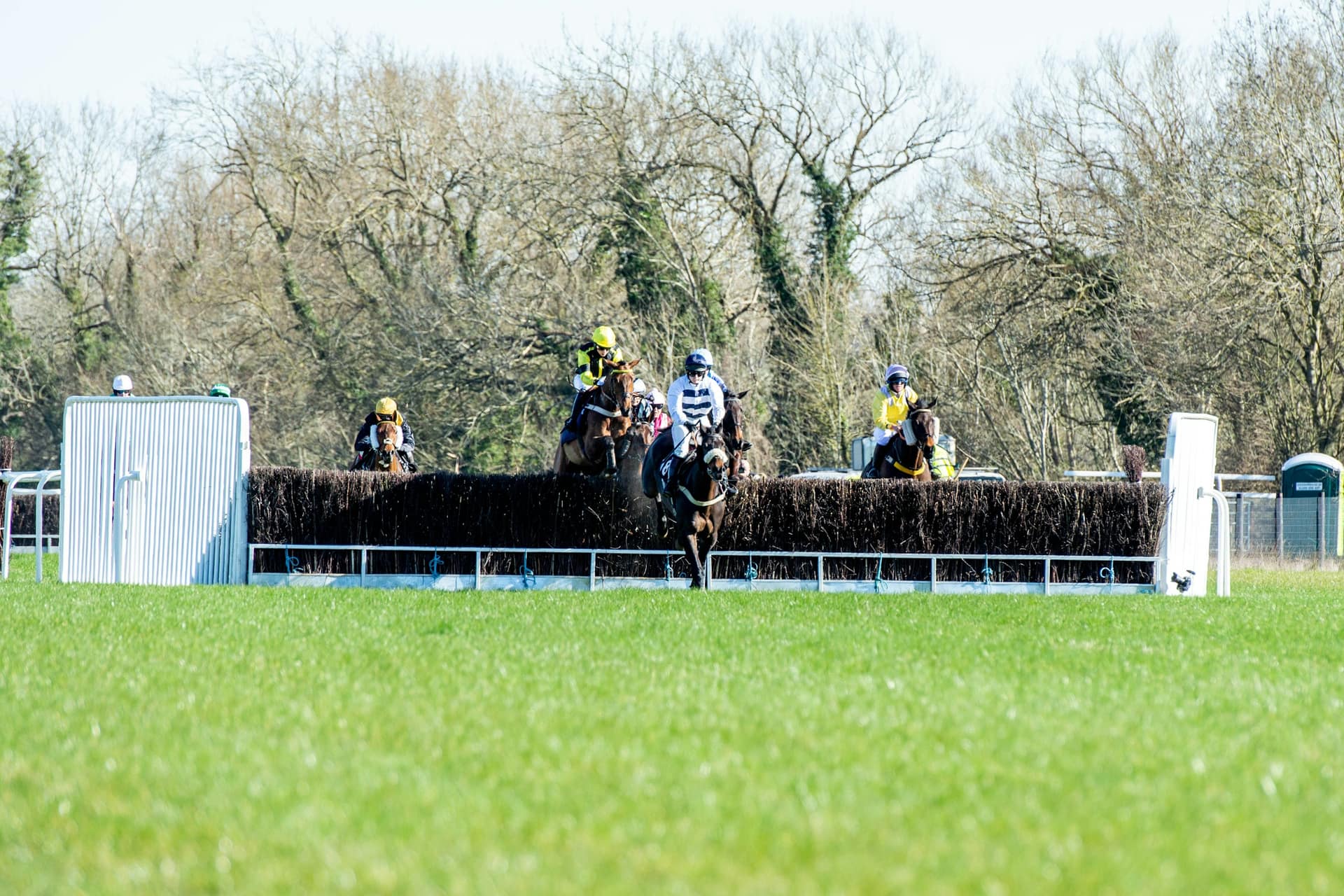
The Placepot is the Tote’s most popular way to bet on a whole race meeting from a single slip. You pick a horse to finish in the places in each of the first six races at one meeting, and if every leg comes good you share the pool with everyone else who got through. Stakes can be tiny, a few placed outsiders can turn pennies into hundreds of pounds, and the bet keeps you interested for the whole afternoon. This guide explains how the Placepot works, from the rules and place terms to what a perm costs and how to read the dividend.
We don’t give daily Placepot picks. What follows is how the bet is built and settled, using the Tote’s own published rules, so you can judge any perm yourself.
What is a Placepot?
The short answer to how does Placepot work: back at least one horse in each of six races, and collect only if you have a placed horse in all six. If you’re asking what is a Placepot in plain terms, it’s a six-leg pool bet. Each leg is one race, and your horse in that leg only has to be placed, not win. Every leg has to come up for the bet to pay.
The Tote runs it, not your bookmaker
The Placepot is a pool bet run by the Tote. The Tote was owned by the UK Government until 2011, when it was sold to Betfred, and it passed to UK Tote Group in 2019. The pool, the rules and the dividend all belong to the Tote, which is why you’ll see the bet called the tote Placepot. Your bookmaker’s fixed odds play no part in it.
Which races count
The Tote’s betting rules say the standard Placepot “will typically involve the first six races of each meeting”, and that it runs on all British meetings and selected overseas meetings. The Tote also runs longer versions, such as the Placepot 7 and the ITV7 Placepot, which use selected races from more than one meeting. The same principle applies: you need a placed horse in every leg.
How it differs from an each way bet
With a bookmaker’s each way bet you back a horse at fixed odds, and the place part pays a fraction of those odds (usually 1/4 or 1/5). The Placepot has no odds and no fractions. A horse that wins and a horse that finishes third are worth exactly the same to you: both simply keep the bet alive. Your return is decided at the end by how much is in the pool and how many other tickets survived.
Placepot rules: place terms, non-runners and stakes
The Placepot rules below come from the Tote’s published betting rules (the version effective from 24 January 2024) and the Tote’s own Placepot guide. Always check the current Tote betting rules before you rely on a detail, because the Tote can change them.
How many places count in each leg
The number of places depends on the number of runners and, in big fields, on whether the race is a handicap:
| Runners | Race type | Places that count |
|---|---|---|
| 2 to 4 | Any | 1st only |
| 5 to 7 | Any | 1st and 2nd |
| 8 to 15 | Any | 1st, 2nd and 3rd |
| 16 or more | Non-handicap | 1st, 2nd and 3rd |
| 16 or more | Handicap | 1st, 2nd, 3rd and 4th |
These are close to the standard bookmaker each way places shown on our each way calculator, but they aren’t the same thing. There is no place fraction, and bookmaker extra-place offers don’t apply to the Tote pool. Also note the small-field leg: with four or fewer runners you need the winner. If you’re not sure what makes a race a handicap, our guide to what a handicap horse race is explains it.
Because the places are set by the number of runners, a late withdrawal that takes a field from eight to seven can cut the places in that leg from three to two.
Non-runners go on the favourite
A Placepot selection that becomes a non-runner is not void. Under the Tote’s rules it is “replaced by the starting price favourite”. If there are joint or co-favourites, the horse with the lowest racecard number is used. The rules also cover rarer cases, such as the favourite itself being withdrawn too late for the market to re-form, in which case the horse with the shortest returned starting price is used.
You can also back the unnamed favourite deliberately. The Tote accepts these bets and settles them on the SP favourite. If you’re unsure how the starting price works, see our guide to what SP means in horse racing.
Abandoned legs, few finishers and dead heats
- Abandoned or void leg: if a leg is abandoned, void or a walkover and isn’t re-run that day, every selection in that leg counts as placed and the pool is settled on the remaining legs. If no legs take place, all stakes are refunded.
- Fewer finishers than places: only the horses that finish count as placed.
- Dead heats: horses that dead-heat for a placing position are all treated as fully placed.
Minimum stakes
The Tote’s Placepot guide says it cut the minimum stake per line and overall stake “from 5p/£1 to 1p/50p”. So online you can play a 1p line, but the whole slip must come to at least 50p. The rules add that minimums apply “at the point of sale”, so a betting shop, an on-course Tote window or another operator selling the bet may set different minimums. Check before you build a big perm at 1p a line.
How the Placepot pool and dividend work
This is where the Placepot is completely different from a fixed-odds bet. Nobody knows what it will pay until all six legs are over.
The deduction
All Placepot stakes for a meeting go into one pool. The Tote’s rules set the Placepot pool deduction at 27%, so the net pool is 73% of the gross pool. That 73% is shared among the winning stakes. Any money carried forward from an unwon pool is added to the gross pool.
How the dividend is declared
The Tote divides the net pool by the total winning stakes, then rounds the result down to the next 10p. That figure is the Placepot dividend, and it is always declared to a £1 stake. The rules also set a minimum Placepot dividend of £1.10.
If there are no winning tickets at all, the whole gross pool is carried forward to another Placepot chosen by the Tote. If there is less than £1 of winning stakes in total, the winners are paid on the net pool and the balance is carried forward.
Guaranteed pools
The Tote guarantees a minimum gross pool at selected meetings, and the size of the guarantee varies with the meeting and the day. Under the rules, if the money actually staked is less than the guarantee, the guarantee becomes the gross pool, so the dividend is worked out as if that amount had been staked. If more is staked, the real figure is used. Check the Tote’s site or racecard for which meetings carry a guarantee.
A worked dividend example
The figures here are made up to show the arithmetic, and they’re not a real result:
- Gross pool: £200,000.
- Net pool after the 27% deduction: £200,000 x 0.73 = £146,000.
- Winning stakes in the pool: the equivalent of 580 £1 lines.
- Calculated dividend: £146,000 / 580 = £251.72.
- Rounded down to the next 10p: a declared dividend of £251.70 to a £1 stake.
Placepot perm: how lines and costs multiply
Most players don’t pick just one horse per leg. A Placepot perm covers more than one horse in some or all of the legs, and the Tote’s rules say how to count the lines: multiply together the number of selections in each leg. Every combination of one horse from each leg is a separate line, and you pay your unit stake on every line.
Perm cost table
We worked these out by multiplying the selections in each leg, then multiplying the lines by the unit stake. Every product has been checked twice.
| Perm (selections per leg) | Lines | Cost at 10p a line | Cost at £1 a line |
|---|---|---|---|
| 1 x 1 x 1 x 1 x 1 x 1 | 1 | 10p (below the 50p minimum) | £1 |
| 2 x 1 x 2 x 1 x 2 x 1 | 8 | 80p | £8 |
| 3 x 2 x 1 x 3 x 2 x 1 | 36 | £3.60 | £36 |
| 2 x 2 x 2 x 2 x 2 x 2 | 64 | £6.40 | £64 |
| 3 x 2 x 2 x 1 x 2 x 3 | 72 | £7.20 | £72 |
| 3 x 3 x 3 x 3 x 3 x 3 | 729 | £72.90 | £729 |
The arithmetic for the less obvious rows: 3 x 2 x 1 x 3 x 2 x 1 = 36 (this is the example the Tote itself uses), 2 multiplied by itself six times = 64, 3 x 2 x 2 x 1 x 2 x 3 = 72, and 3 multiplied by itself six times = 729.
A single-line Placepot at 10p is under the 50p online minimum, so the cheapest single line online is 50p.
Placepot calculator
Set how many horses you have in each leg and the stake per line to see what the perm costs. After racing, set how many of your horses placed in each leg and type the declared dividend to see your return.
- Cost of the perm
- £0.00
- Lines
- 0
- Winning lines
- 0
- Return
- -
The return needs the dividend, which the Tote declares after the sixth leg.
Bankers versus perming
A leg where you pick one horse is a banker. Bankers keep costs down: every banker leg multiplies the cost by one. But a beaten banker sinks the whole bet, however many horses you covered elsewhere. Adding a second horse to a leg doubles the cost of the whole perm, and a third triples it. That’s why perms like 3 x 3 x 3 x 3 x 3 x 3 get so expensive so quickly.
A common approach is to bank on the legs where you’re most confident (often small fields with a clear favourite) and spend the extra lines on the legs that are hardest to call.
Working out your return from winning lines
In a perm you can have more than one winning line. The number of winning lines is the number of your placed horses in each leg multiplied together. Your return is:
dividend x unit stake (in pounds) x number of winning lines
Take the 3 x 2 x 2 x 1 x 2 x 3 perm at 10p a line (£7.20) and the £251.70 dividend from the example above. Suppose your placed horses per leg are 2, 1, 1, 1, 1 and 2. That gives 2 x 1 x 1 x 1 x 1 x 2 = 4 winning lines.
- Each 10p line returns £251.70 x 0.10 = £25.17.
- Four winning lines return £25.17 x 4 = £100.68.
- Profit after the £7.20 stake: £100.68 minus £7.20 = £93.48.
If only one of those horses had placed in leg 1, you’d have 2 winning lines and a return of £50.34. If any leg had none of your horses placed, the return would be nothing.
Quadpot: the last four legs
The Quadpot is the Placepot’s shorter sibling. The Tote’s rules describe it as selecting a horse to be placed in each of races 3 to 6 at a meeting, with the same place terms as the Placepot.
How it relates to the Placepot
Because it uses the same races as the last four legs of the Placepot, the Quadpot is a second chance. The Tote’s own guide points out that if you go out in the first two legs, you can buy back into the Quadpot. It’s also an option if you don’t fancy the opening two races.
Different pool, different deduction
The Quadpot is a separate pool with its own dividend. The Tote’s rules set its deduction at 26%, leaving a net pool of 74%. Minimum stakes on the Tote’s Quadpot guide are the same as the Placepot: 1p per line with a 50p total. With fewer legs it is easier to land, so dividends tend to be smaller than the Placepot on the same day.
Strategy notes that stay honest
There is no system that beats a pool with a 27% deduction over time. The goal is to give your perm a better chance than the average ticket and to be paid well when it lands.
Why favourites reduce dividends
The dividend depends on how many other tickets survive. When the favourites place in every leg, a large share of the pool survives with you and the dividend is small. The Tote’s own guide notes that the biggest dividends come when the most popular horses miss the places. Backing every favourite is the easiest way to land a Placepot and the worst way to be paid for it.
Big-field handicaps
Big handicaps are where Placepots are won and lost. A handicap of 16 or more runners pays four places, which helps, but the weights are set to bring the runners together, which makes the finishing order harder to call. These legs usually deserve the most cover. A leg where one well-backed horse beats a small field is the natural place for a banker, but remember that a banker that misses ends your bet.
Building the perm
- Set the budget first, then build the perm to fit it, not the other way round.
- Use the field sizes. Check the runners in every leg, because they decide how many places you get.
- Look for one opposable favourite. If you can leave out a short-priced horse in a leg and still get through, your ticket stands out from the crowd.
- Read the form properly. Recent runs, the going and the trip all matter, and our horse racing terms glossary explains the jargon on the racecard.
Is the Placepot a good bet?
It’s good value for entertainment: a small stake keeps you involved in six races, and a placed outsider or two can produce a big return. The 27% deduction is the cost of that. As with all pool bets, you profit only when your ticket is better than the crowd’s.
Can you use a calculator for a Placepot?
Not a fixed-odds one. A tool such as our bet calculator multiplies the odds you took, and there are no odds in a Placepot. The dividend comes from the pool after racing, so no calculator can tell you the return in advance. What you can work out beforehand is the cost of your perm, and once the dividend is declared the Placepot calculator above (or the formula in the section on winning lines) gives your exact return.
The Tote runs other pools in the same way, including the Tote Jackpot (six winners rather than six placed horses) and exacta and trifecta pools on single races. Our guide on how to bet a trifecta explains how those pools are shared out, and how to bet on horses covers the fixed-odds bets your bookmaker offers.
Pool bets like the Placepot pay out only when every leg comes in, and losing runs can be long. Set your budget before racing, bet only what you can afford to lose and never chase losses. Gambling responsibly.
Frequently asked questions
You need a placed horse in each of the six legs. The places depend on the field: one with 2 to 4 runners, two with 5 to 7, three with 8 or more, and four in handicaps of 16 or more. Non-runners switch to the SP favourite.
It depends on the pool. The Tote keeps 27%, and the rest is split between the winning stakes, declared as a dividend to a £1 stake. A day of placed favourites can pay only a few pounds, while placed outsiders can push it into the hundreds or thousands.
It pays on one, two, three or four places, depending on the leg. Small fields of 2 to 4 runners need the winner, 5 to 7 runners pay two places, 8 or more pay three, and handicaps with 16 or more runners pay four places.
Multiply the declared dividend by your unit stake in pounds, then by your number of winning lines. A £120 dividend with two winning 20p lines gives £120 x 0.20 x 2, which is £48 back. Take off your total stake to see the profit.
You win when at least one of your selections is placed in every one of the six races. Covering more horses in the hard legs raises your chance of getting through, but every extra horse multiplies the cost of the whole perm.
It's a good bet for small-stake entertainment across a whole meeting, and it can pay big when fancied horses miss the places. It isn't a reliable profit maker, because the Tote deducts 27% of the pool before anything is paid out to the winners.