Epsom Derby 2027: Date, Race Time and How the Derby Festival Works
By the MyHorseBets team · Updated · 14 min read
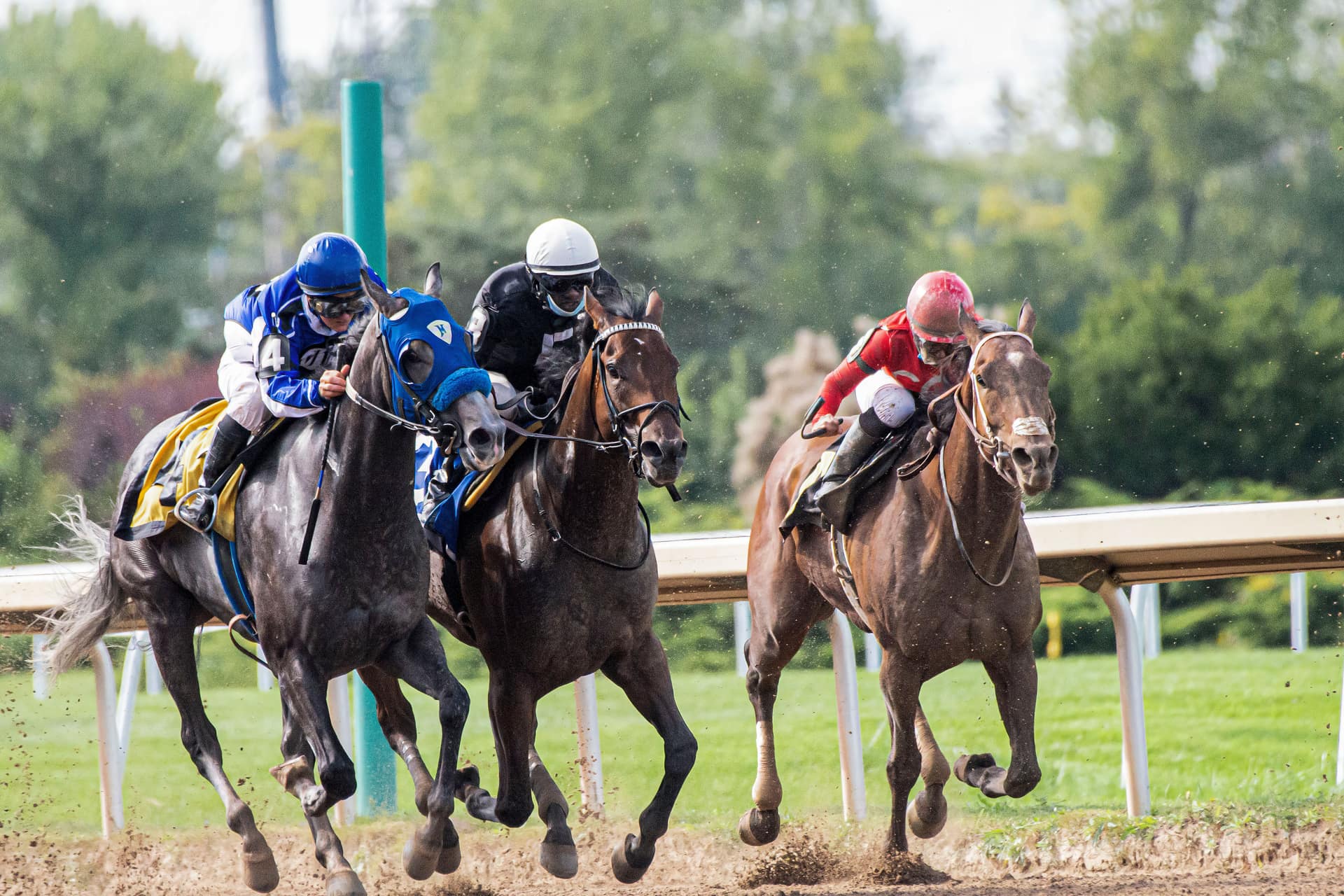
The Epsom Derby 2027 will be run at 4.00pm on Saturday 5 June 2027 at Epsom Downs Racecourse in Surrey. It is the centrepiece of the two-day Betfred Derby Festival, which starts on Friday 4 June with Ladies Day and the Betfred Oaks, also at 4.00pm. The Jockey Club, which owns and runs Epsom, has published both dates and a provisional race timetable for each day: gates open at 11am and the first race is at 1.30pm.
This page covers the Derby Festival 2027 day by day, what makes the Derby itself such an unusual test, where the race came from, the last eleven winners, how to watch it and how each way terms work in a Group 1 field. We don’t publish tips. When the runners are declared, we add them to the update log at the bottom.
When Is the Epsom Derby 2027?
The Jockey Club’s Derby Festival date and time page states that “The Betfred Derby Festival 2027 will begin on Friday 4 June at Epsom Downs Racecourse” and that “The Derby Day date is Saturday 5 June”. We checked it on 2 October 2026.
Derby Festival 2027 Dates and Times
| Day | Date | Gates open | First race | Feature race |
|---|---|---|---|---|
| Ladies Day | Friday 4 June 2027 | 11am | 1.30pm | Betfred Oaks, 4.00pm |
| Derby Day | Saturday 5 June 2027 | 11am | 1.30pm | Betfred Derby, 4.00pm |
There are eight races on each day. The last race is at 5.50pm on the Friday and 5.55pm on the Saturday.
Is the 2027 Derby Race Time Confirmed?
The Jockey Club’s main Derby Festival page says “The Betfred Derby 2027 will be run at 4.00pm on Saturday 5 June”, and the timetable lists the Derby at 4.00pm. The full race order on both days is labelled “provisional”, so individual race times can still move, but a 4.00pm Derby is what the course has published. The pattern fits the race’s history: Wikipedia’s Derby article notes that it is run “on the first Saturday of June each year”, and 5 June is the first Saturday of June 2027.
The Derby, Not the Kentucky Derby
Search results often mix the two. The Kentucky Derby is a separate American race that, as Wikipedia puts it, borrowed the “Derby” name. In Britain, “the Derby” always means the race at Epsom, and this page is only about that one.
Derby Festival 2027: Race Schedule Day by Day
Both cards below are the Jockey Club’s provisional timings, with the race names as the course publishes them. Sponsors change from year to year.
Ladies Day: Friday 4 June 2027
| Time | Race | Distance |
|---|---|---|
| 1.30pm | Win With ZYN 3YO Dash Handicap | 5f |
| 2.05pm | British EBF Woodcote Stakes | 6f |
| 2.40pm | Betfred Diomed Stakes (Group 3) | 1m+ |
| 3.15pm | Betfred Nifty 50 Handicap | 1m 2f |
| 4.00pm | Betfred Oaks (Group 1) | 1m 4f |
| 4.40pm | HKJC World Pool Handicap | 1m 2f |
| 5.15pm | Cygames Surrey Stakes | 7f |
| 5.50pm | Debenhams Handicap | 7f |
Friday’s feature is the Oaks, the Classic for three-year-old fillies. The Diomed Stakes takes its name from the first Derby winner.
Derby Day: Saturday 5 June 2027
| Time | Race | Distance |
|---|---|---|
| 1.30pm | Betfred Tattenham Corner Stakes (Group 3) | 7f |
| 2.05pm | Princess Elizabeth Stakes (Group 3) | 1m+ |
| 2.40pm | Coolmore Coronation Cup (Group 1) | 1m 4f |
| 3.15pm | Betfred Dash (Heritage Handicap) | 5f |
| 4.00pm | Betfred Derby (Group 1) | 1m 4f |
| 4.40pm | Lester Piggott Handicap | 1m 2f |
| 5.20pm | HKJC World Pool Northern Dancer Handicap | 1m 4f |
| 5.55pm | JRA Tokyo Trophy Handicap | 6f |
Saturday has two Group 1 races. That is new: in its December 2025 announcement, the Jockey Club moved the Coronation Cup, a race for older horses over the Derby trip, from Friday to Saturday for 2026, so that it, the Dash and the Derby run back to back. The same announcement introduced the Tattenham Corner Stakes as a new Group 3.
Prize Money
For 2026, the Jockey Club raised the Derby to £2 million in total prize money, with £1 million to the winner, which it described as making it “the joint richest race in the UK”. The Coronation Cup rose from £450,000 to £1 million. We haven’t found a confirmed 2027 prize fund on the Jockey Club’s site yet, so we’ll add it when it is published.
The Derby Race Explained
The Derby is a Group 1 flat race for three-year-olds, run over about a mile and a half on turf. What makes it different from the other big middle-distance races is the course.
Distance
The Jockey Club gives two versions. Its main Derby page says “1 mile, 4 furlongs and 10 yards”, while its own Derby facts page says “one mile, four furlongs and six yards, or 2,420 metres”. Wikipedia shows the same split: 10 yards in the text, 1m 4f 6y in its race summary. Either way, it is about 12 furlongs. If furlongs are new to you, see how many furlongs are in a mile.
The Course and Tattenham Corner
Epsom is not a round track. Wikipedia’s article on the racecourse describes it as “roughly U-shaped”, and explains that the Derby course “features an ascent to the top of the hill followed by a wide, sweeping left turn (Tattenham Corner) as the horses descend towards the straight”. The half-mile straight is mainly downhill, “with a final sharp ascent in the last hundred yards”. The track also slopes across its width, the famous camber. In the soft ground of 2026, the Racing Post reported that the runners “fanned across the famous camber in the home straight” instead of using the stands’ side rail. A horse needs balance going downhill and round a bend as well as stamina, which is why the Derby is such a distinctive test.
Who Can Run and What They Carry
The race is open to three-year-old colts and fillies; geldings are excluded. According to Wikipedia, colts carry 9st 2lb and fillies receive a 3lb allowance. Every runner carries the same weight apart from that allowance, so it is not a handicap.
Field Size and Declarations
Wikipedia states a maximum of 20 runners. Recent fields have been smaller: the Racing Post’s report of the 2026 race shows 14 runners. The Jockey Club made 72-hour declarations for the Derby permanent from 2026, so the final field is known three days before the race. In 2026 that meant a live stalls draw on the Wednesday of Derby week.
Epsom Derby History
The Derby is one of the oldest races in the world, and much of what we now call flat racing grew up around it.
First Run in 1780
According to Wikipedia, the first Derby was held on Thursday 4 May 1780 and won by Diomed, a colt owned by Sir Charles Bunbury. The first four runnings were over a mile; the race was extended to a mile and a half in 1784. It was run on a Wednesday for most of the 20th century and moved to Saturday after 1994. In 1931, it became the world’s first outdoor sporting event to be televised.
Why Is It Called the Derby?
The race is named after the 12th Earl of Derby. Wikipedia explains that it was planned at a celebration after the first Oaks in 1779, and was to be named after either Lord Derby, the host, or his guest Sir Charles Bunbury. “According to legend the decision was made by the toss of a coin”, but Bunbury probably deferred to his host. The Oaks itself is named after Lord Derby’s estate near Epsom.
Has a Filly Ever Run in the Derby?
Yes, and six have won it. The Jockey Club’s facts page lists them: Eleanor (1801), Blink Bonny (1857), Shotover (1882), Signorinetta (1908), Tagalie (1912) and Fifinella (1916), the most recent. It adds that “The last filly to run in the Derby was Cape Verdi in 1998” and that, although the race is open to fillies, it “is rarely contested by fillies” today. Most top fillies run in the Oaks the day before instead.
The Classics, the Triple Crown and the Oaks
Britain has five Classic races for three-year-olds. Wikipedia calls the Derby “the most prestigious of the five” and Britain’s joint richest flat race.
2000 Guineas, Derby, St Leger
The Derby is the middle leg of the British Triple Crown: the 2000 Guineas at Newmarket over a mile, then the Derby, then the St Leger at Doncaster in September. Wikipedia’s Triple Crown article records that the most recent winner of all three was Nijinsky in 1970, and that since then only Nashwan (1989), Sea the Stars (2009) and Camelot (2012) have won both the Guineas and the Derby. The step up from a mile to a mile and a half is the big question for any Guineas winner heading to Epsom.
The Oaks and the Fillies’ Triple Crown
The Oaks is the fillies-only Classic, run on the Friday over the same mile and a half. It was first run in 1779, a year before the Derby. According to Wikipedia, it is the middle leg of the Fillies’ Triple Crown, between the 1000 Guineas and the St Leger. The Jockey Club lists Thundering On as the 2026 Oaks winner.
Recent Epsom Derby Winners
Here are the last eleven Derby winners, with the jockey and trainer, from the winners table in Wikipedia’s Epsom Derby article, checked on 2 October 2026.
| Year | Winner | Jockey | Trainer |
|---|---|---|---|
| 2026 | Christmas Day | Ronan Whelan | Aidan O’Brien |
| 2025 | Lambourn | Wayne Lordan | Aidan O’Brien |
| 2024 | City of Troy | Ryan Moore | Aidan O’Brien |
| 2023 | Auguste Rodin | Ryan Moore | Aidan O’Brien |
| 2022 | Desert Crown | Richard Kingscote | Sir Michael Stoute |
| 2021 | Adayar | Adam Kirby | Charlie Appleby |
| 2020 | Serpentine | Emmet McNamara | Aidan O’Brien |
| 2019 | Anthony Van Dyck | Seamie Heffernan | Aidan O’Brien |
| 2018 | Masar | William Buick | Charlie Appleby |
| 2017 | Wings of Eagles | Padraig Beggy | Aidan O’Brien |
| 2016 | Harzand | Pat Smullen | Dermot Weld |
The 2020 race was run on 4 July without spectators because of COVID-19. The Racing Post’s report shows Christmas Day won at 7/1 in 2026, ahead of Maltese Cross and James J Braddock.
Aidan O’Brien’s Record
Wikipedia lists Aidan O’Brien as the leading trainer in the race’s history with 12 wins, the latest four in a row from 2023 to 2026. His first was Galileo in 2001.
Other Derby Records
Wikipedia’s records section lists Lester Piggott as the leading jockey with nine wins, from Never Say Die in 1954 to Teenoso in 1983. The fastest winning time at Epsom is 2m 31.33s by Workforce in 2010, and the widest winning margin is 10 lengths, by Shergar in 1981. Three winners have returned at 100/1: Jeddah (1898), Signorinetta (1908) and Aboyeur (1913).
How to Watch the Derby on TV
ITV took over British racing coverage from Channel 4 on 1 January 2017. Wikipedia’s ITV Racing article lists the Epsom Derby among the big events ITV broadcasts, alongside the Grand National, Cheltenham and Royal Ascot. ITV’s channel and programme times for 2027 are usually confirmed nearer the day, so check the TV listings that week. If you go in person, the Jockey Club’s Derby page gives the racecourse postcode as KT18 5LQ and advises booking in advance, as some enclosures are likely to sell out.
Betting on the Derby
The Derby is a level-weights Group 1, usually with a field in the teens, so the betting works differently from a big handicap. Here are the points that matter, with links to the pages that cover each one in full.
Ante-Post and Non-Runner No Bet
The Derby market is open long before June, and the spring trials (including the 2000 Guineas) reshape it. Betting before the final field is set is ante-post betting. Sky Bet’s horse racing rules spell out the risk: “Stakes are lost on an Ante Post bet if a selection does not take part.” Some bookmakers offer non-runner no bet (NRNB) terms on the Derby, where, in Sky Bet’s words, “if the horse you backed doesn’t run in the race specified then your stake will be returned”. Our guide to ante-post betting explains the trade-off between a bigger price and the risk of a non-runner. On the day itself, best odds guaranteed pays the starting price if it beats the price you took, where your bookmaker offers it.
Each Way Terms in a Group 1 Field
The Derby is a non-handicap, so the terms are set by the number of runners only. Sky Bet’s horse racing rules give these standard terms for non-handicaps:
| Runners | Places paid | Fraction of the odds |
|---|---|---|
| 2 to 4 | Win only | None |
| 5 to 7 | 2 (first and second) | 1/4 |
| 8 or more | 3 (first, second, third) | 1/5 |
The same rules say the place terms are “determined by the number of horses coming under starter’s orders”, not the number declared when you bet. So a field of eight that loses one horse at the start drops to two places. For the basics of how the two halves work, see what an each way bet is.
Worked Example: £10 Each Way in a 14-Runner Derby
Say you back a horse at 12/1, £10 each way, in a 14-runner Derby like 2026’s. That is £20 staked. With eight or more runners, the place terms are 1/5 the odds for three places, so the place odds are 12/1 x 1/5 = 12/5 (2.4/1).
- It wins. Win half: £10 x 12 = £120 plus the £10 stake, so £130. Place half: £10 x 2.4 = £24 plus £10, so £34. Total return £164, a profit of £144.
- It finishes second or third. The win half loses. The place half returns £34. Profit on the bet: £34 minus £20, so £14.
- It finishes fourth or worse. You lose £20.
Now take a smaller Group 1 field on the same weekend with only seven runners, and £10 each way at 8/1. The terms become 1/4 the odds for two places, so the place odds are 8/1 x 1/4 = 2/1. A win returns £90 plus £30, so £120. Second place returns £30, a profit of £10. Third place now returns nothing. Our each way calculator runs these sums for any price and terms, and the odds calculator gives the straight win return.
Non-Runners and Rule 4
With 72-hour declarations, most withdrawals happen before the final field is set. If a horse is taken out after that, bets struck at a fixed price can face a Rule 4 deduction on winnings; the Rule 4 calculator works out the figure. If you combine a Friday selection and a Saturday selection in one bet, our double bet calculator settles it. Set a budget for the weekend before Friday and stick to it; our responsible gambling page has the tools and help lines.
Update Log
We update this page as the Derby approaches. Dates are when we checked the official sources.
- 2 October 2026: Page published with the Derby Festival 2027 dates (Friday 4 and Saturday 5 June 2027), the 4.00pm Derby and Oaks times and the provisional race timetables from the Jockey Club’s date and time page. No entries or declarations yet. We’ll next update the page when the Jockey Club confirms the 2027 prize money, and again when the Derby and Oaks fields are declared, 72 hours before each race.
Frequently asked questions
Saturday 5 June 2027, at Epsom Downs. The Derby Festival starts the day before, on Friday 4 June, with Ladies Day and the Oaks. Both dates come from the Jockey Club, which runs Epsom and published them for the 2027 festival.
The Jockey Club has published 4.00pm on Saturday 5 June 2027 as the Derby race time. It is the fifth of eight races on Derby Day, which starts at 1.30pm. The timetable is marked provisional, so confirm on the racecard that week.
It is named after the 12th Earl of Derby, who hosted the party in 1779 where the race was planned. Legend says a coin toss decided between his name and Sir Charles Bunbury's, though Bunbury most likely just deferred to his host. Bunbury's horse Diomed won the first running.
Yes. Fillies are allowed to run and receive a 3lb weight allowance. Six have won, the last being Fifinella in 1916, and the most recent filly to take part was Cape Verdi in 1998. Today the best fillies usually run in the Oaks on the Friday instead.
The 2027 field isn't known yet. The Derby has 72-hour declarations, so the final runners are confirmed three days before the race, along with the stalls draw. Until then, any list is entries or ante-post market leaders. We add the declared field to the update log here.
About a mile and a half, or 12 furlongs. The Jockey Club quotes it as 1 mile, 4 furlongs and 10 yards on its main page and 1 mile, 4 furlongs and 6 yards on its facts page. The 2026 winner took 2 minutes 43.75 seconds on soft ground.