National Hunt Racing Explained: Jumps vs Flat
By the MyHorseBets team · Updated · 14 min read
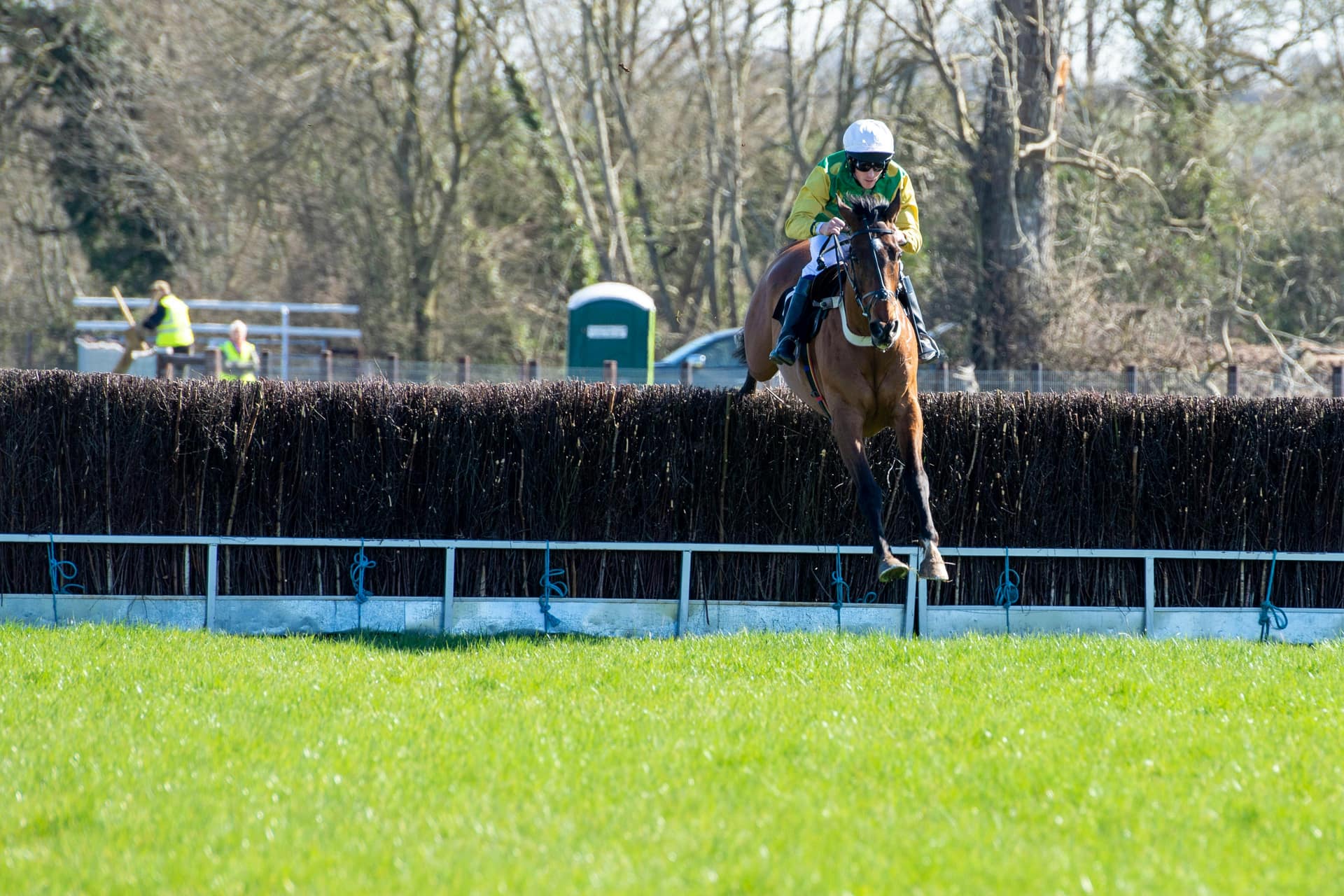
National Hunt racing is the official name for jump racing in Britain and Ireland: races where horses jump hurdles or fences, run over at least two miles, mostly through the autumn, winter and spring. The Jockey Club’s glossary defines National Hunt simply as “racing over fences and hurdles; officially referred to as Jump racing.” The other code is the Flat, where there are no obstacles and the races are shorter.
That one difference changes almost everything else: the horses, their ages, the weights they carry, the calendar and the way a bet behaves, because a horse can fall. This guide walks through the race types, the season and the big meetings, then shows with worked £ examples what jumps racing means for each way bets and multiples.
What Does National Hunt Mean in Horse Racing?
In everyday racing talk, “National Hunt”, “NH”, “jumps” and “jump racing” all mean the same thing. On a racecard, a hurdle race, a steeple chase (usually shortened to “chase”) and a National Hunt flat race are all National Hunt races, even though the last one has no jumps at all.
Why Is It Called National Hunt Racing?
Jump racing grew out of the hunting field. Wikipedia’s history of the sport traces the first recorded steeplechase to a match between Buttevant and Doneraile in County Cork in 1752, and the word steeplechase comes from riders racing across country towards a church steeple. The “National Hunt” name comes from the committee that was set up in the 1860s to regulate jumping, and from the National Hunt Steeplechase, a race introduced to head an annual carnival of jump racing. Historical accounts disagree on the exact year the National Hunt Committee was founded, so we won’t pin it to one.
Who Runs National Hunt Racing Today?
The British Horseracing Authority (BHA) regulates both codes in Britain. Its General Instructions on race planning set the rules that make a race a jumps race, and they are the source for most of the numbers in this guide.
Flat vs National Hunt: The Key Differences
The quickest way to see what makes national hunt racing different is to put the two codes side by side. The figures below come from the BHA’s General Instructions on race planning, its 2022 weights announcement, the Racing Post’s guide to racing, Great British Racing’s guide to Flat and jumps, and the Jockey Club’s glossary (for the Flat turf season).
| Flat | National Hunt (jumps) | |
|---|---|---|
| Obstacles | None | Hurdles or fences (none in bumpers) |
| Shortest race | 5 furlongs | 2 miles |
| Longest race | 2 miles 6 furlongs | about 4 miles 2 furlongs (Grand National) |
| Youngest runners | Two-year-olds | Three-year-olds over hurdles, from 1 May |
| Most weight allowed | 12st | 13st |
| Least weight allowed | 8st 2lb | 10st 2lb |
| Start | Starting stalls | No stalls |
| Core season | Late March to early November (turf) | October to April |
Obstacles and Distances
The BHA’s rules say “no steeple chase or hurdle race may be run over a distance of less than two miles”, while no Flat race may be shorter than five furlongs or longer than two miles six furlongs. So the shortest jumps race is about as long as a middle-distance Flat race. If you want to convert those distances into furlongs, our guide to how many furlongs are in a mile has the table: two miles is 16 furlongs. Jumps racing rewards stamina and jumping, the Flat rewards speed.
The Horses and Their Ages
Flat horses start as two-year-olds. Under the BHA’s rules, no horse can run in a hurdle race until 1 May of the year it turns three, in a steeple chase until 1 July of the year it turns four, or in a hunters’ chase until 1 January of the year it turns five. Great British Racing notes that some jumps horses race into their teens. Many are bred specifically for jumping: the BHA describes bumpers as races for “usually late-maturing, Jumps-bred horses”.
Weights
Jumps horses carry much more than Flat horses. The BHA’s rules set a maximum of 13st in any hurdle, chase or bumper and a minimum of 10st 2lb (unless a jockey’s allowance is claimed). When the BHA raised weights in May 2022, the standard top weight in jump handicaps went from 11st 12lb to 12st, and on the Flat from 10st to 10st 2lb. More weight and longer trips are one reason form over jumps can look so different from Flat form.
Types of Jumps Races
There are three basic race types in National Hunt racing, plus a few specialist ones. Each sits on the racecard with its own name, so it is worth knowing what you are looking at before you bet.
Hurdles
Hurdles are the smaller obstacles. Wikipedia’s entry gives hurdles a minimum height of three and a half feet, with hurdle races run over roughly two to three and a half miles. The Jockey Club’s glossary says horses usually have a season or two over hurdles before they move on to fences.
Steeplechases (Chases)
Chases are run over bigger, fixed fences, including open ditches and water jumps. The Jockey Club describes them as races “over fences, open ditches and water jumps, run over distances from two miles up to four and a half miles”, and Wikipedia gives a minimum fence height of four and a half feet. The Cheltenham Gold Cup, the King George VI Chase and the Grand National are all chases.
Bumpers: What Is a Bumper Race?
A bumper is a National Hunt flat race: a jumps race with no jumps. The Jockey Club calls it “a Flat race run under Jump Rules, used to educate young prospective jumps horses before they tackle hurdles or fences.” The BHA’s rules say a bumper must be between one and a half and two and a quarter miles, run at weight for age, and open only to horses that have not run under the rules of Flat, hurdle or chase racing, apart from other bumpers (Irish bumpers and French AQPS races also count).
Hunter Chases and Cross Country Races
Hunter chases, according to the BHA, are “restricted both to amateur riders and horses that are currently issued with certificates to show they have been taking part in hunting”, and the BHA’s rules say none may be run before 1 January. Cross country chases are rarer still: Cheltenham has a cross country course inside the main track, and its best known race, the Glenfarclas Cross Country Chase, is run over about three miles five and a half furlongs with 32 obstacles on the second day of the Cheltenham Festival.
Race Grades, Classes and Novice Races
Within each race type, races are graded by quality and by who is allowed to run. These labels decide how strong the field is likely to be and, in handicaps, how the weights are set.
Graded Races and Premier Handicaps
The top jumps races are Graded, the jumps version of the Flat’s Group races. The BHA’s glossary of race types counts “40 Grade 1, 67 Grade 2 and 40 Grade 3 races” over jumps in Britain. Grade 1 races are run at level weights, with allowances for age or sex. Big jumps handicaps used to be called Grade 3 handicaps; the BHA renamed them from 1 October 2022, saying that “all British Grade 3 Handicaps will be renamed ‘Premier Handicaps’”, with the same black type status.
Race Classes
Every British race also carries a class number, with Class 1 at the top. The Racing Post’s guide explains the principle: the lower the ratings band of the horses allowed to run in a handicap, the lower its class. A Class 1 Grade 1 chase and a low class handicap hurdle on the same card can be completely different betting propositions, so check the class before comparing form. For how ratings turn into weights, see our guide to what a handicap horse race is.
Novice, Beginners’ and Maiden Races
Over jumps, a novice is defined by the BHA as a horse “which has not won a chase/hurdle race respectively before the end of the previous season”. So a horse can win a novice hurdle in October and keep running in novice hurdles until the season ends. Beginners’ chases are for horses that have never won a chase. Novice form is thinner and less reliable, which is worth remembering when prices look short.
The Jumps Season: When Does National Hunt Racing Run?
Jumps racing in Britain never fully stops. Great British Racing puts it this way: “The jumps runs all year round but the core action takes place from October to April.” The summer is quieter, with fewer and smaller meetings, while the big Flat meetings take over.
Start and End Dates
The jumps season is measured from spring to spring. The Professional Jockeys Association says the 2026/27 jump jockeys’ championship is decided on winners “from Saturday 2nd May 2026 to Saturday 24th April 2027.” The season ends with the bet365 Jump Finale at Sandown on Saturday 24 April 2027, when the champion jockey, trainer, owner and conditional are crowned.
The Autumn Return
For most racegoers, the season really starts when the bigger courses come back. The Jockey Club’s 2026/27 listings start with a season opener at Huntingdon on 6 October 2026, and Cheltenham’s first meeting is its Showcase on 23 and 24 October 2026. Ground matters more as the season goes on: Wikipedia notes that jump racing is mainly a winter sport because softer ground makes jumping safer.
The Big National Hunt Meetings
The calendar builds towards spring. These are the major fixtures with dates we have checked against the courses’ own listings.
| Meeting | Course | Date |
|---|---|---|
| The November Meeting | Cheltenham | 13 to 15 November 2026 |
| The Christmas Meeting | Cheltenham | 11 and 12 December 2026 |
| King George VI Chase | Kempton | Saturday 26 December 2026 |
| Welsh Grand National | Chepstow | Monday 28 December 2026 |
| New Year’s Day | Cheltenham | 1 January 2027 |
| Festival Trials Day | Cheltenham | 30 January 2027 |
| Cheltenham Festival | Cheltenham | 16 to 19 March 2027 |
| Grand National Festival | Aintree | 8 to 10 April 2027 |
| Jump Finale | Sandown | 24 April 2027 |
Cheltenham
Cheltenham is the home of jump racing, with meetings from October to April. The four-day Cheltenham Festival is the peak of the season: 28 races, seven a day, finishing with the Gold Cup on Friday 19 March 2027. Our Cheltenham betting guide covers the markets and each way terms for festival week.
Aintree and the Grand National
The Grand National is a handicap chase, and the 2027 race is scheduled for 4pm on Saturday 10 April at Aintree, at the end of a three-day festival. It is the one jumps race many people bet on each year; our guide to how to bet on the Grand National explains the bet types and place terms.
Christmas and the Other Nationals
Kempton’s Christmas Festival runs on 26 and 27 December 2026, with the King George VI Chase on Boxing Day. Chepstow says the 2026 Welsh Grand National, a three and three-quarter mile race, is on Monday 28 December. The Scottish Grand National is a handicap chase run at Ayr each April, and in Ireland the five-day Punchestown Festival in April is often described as the Irish version of Cheltenham.
Betting on National Hunt Racing
The bet types are the same as on the Flat, but jumps racing changes the odds of a bet surviving the race. A horse can fall, unseat its rider or be pulled up at any point, and any of those ends your bet on it, however well it was travelling. A horse that doesn’t finish can’t win or place, so a win or each way bet on it is lost.
Reading Jumps Form: F, U and P
Jumps form figures include letters you won’t see on the Flat. The Jockey Club’s form guide says “F indicates the horse fell”, U or UR means the horse unseated its jockey, P or PU means it was pulled up, R means it refused and BD means it was brought down by another runner. A run of letters can mean poor jumping, or just bad luck in a crowded race, so it is worth looking at the race itself. Our guide to how to read horse racing form explains the rest of the figures.
Each Way in Big Jumps Handicaps
Big jumps handicaps can attract 16 or more runners, which is where each way terms are at their most generous. Sky Bet’s racing rules, for example, pay a handicap with 16 or more runners at 1/4 the odds for four places, and one with 12 to 15 runners at 1/4 for three places. The same rules say the terms depend on “the number of horses coming ‘under starter’s orders’”, so non-runners can cost you a place. Our guide to what an each way bet is has the full table.
Worked example. You have £5 each way at 20/1 in an 18-runner handicap chase: £10 staked in total. Four places are paid at 1/4 the odds, so the place odds are 20/1 x 1/4 = 5/1.
| Result | Win part (£5 at 20/1) | Place part (£5 at 5/1) | Total return | Profit or loss |
|---|---|---|---|---|
| Wins | £105 | £30 | £135 | £125 profit |
| Finishes 4th | £0 | £30 | £30 | £20 profit |
| Finishes 5th | £0 | £0 | £0 | £10 loss |
| Falls | £0 | £0 | £0 | £10 loss |
The working: the win part pays £5 x 20 = £100 plus the £5 stake, so £105. The place part pays £5 x 5 = £25 plus £5, so £30. In fourth, only the place part pays, and the £30 return is a £20 profit on the £10 outlay. If three horses had been withdrawn before the off, leaving 15 under orders, only three places would be paid and fourth would return nothing. Run your own numbers in our each way calculator.
A Lucky 15 When One Selection Falls
A Lucky 15 is four selections combined into 15 bets: William Hill’s betting guide lists them as “4 x Singles, 6 x Doubles, 4 x Trebles, 1 x Fourfold Accumulator”. It is a common bet on festival days, and jumps racing shows clearly why the singles matter. A faller loses every bet it is part of, but the bets without it still pay.
Worked example. £1 per bet, so £15 staked. Your four selections are A at 3/1, B at 5/2, C at 6/1 and D at 4/1 (decimal 4.0, 3.5, 7.0 and 5.0). A, B and D win. C falls.
| Bets | Settled | Return |
|---|---|---|
| Singles A, B, D | £4 + £3.50 + £5 | £12.50 |
| Doubles AB, AD, BD | £14 + £20 + £17.50 | £51.50 |
| Treble ABD | £1 x 4.0 x 3.5 x 5.0 | £70 |
| Every bet with C | Lost | £0 |
| Total | £134 |
That is a £119 profit on £15. Had C stood up and won as well, all 15 bets would have paid: £19.50 from the singles, £139 from the doubles, £430.50 from the trebles and £490 from the fourfold, a total return of £1,079. One fall took £945 off the return. If two selections fall and only A and D win, you are left with two singles and one double: £4 + £5 + £20 = £29, a £14 profit. Our Lucky 15 calculator settles any combination of winners, losers and fallers.
Things That Move Jumps Prices
The going, the trip and the type of obstacle all matter more over jumps than many newcomers expect. A horse with Flat form may never have jumped a fence, a novice chaser may be facing seasoned rivals for the first time, and a long-distance handicap on heavy ground is a very different test from a two-mile hurdle on good ground. None of this makes any result predictable, and falls mean even well-fancied horses can lose.
Betting always carries a risk of loss and no tipster, system or staking plan can guarantee a profit. Only stake what you can afford to lose, and set a budget before you start. Gambling responsibly.
Frequently asked questions
It means jump racing. National Hunt is the official British and Irish term for racing over hurdles and fences, and it also covers bumpers, which are flat races for young jumps horses run under jump rules. Everything else, raced without obstacles over shorter trips, is called the Flat.
The name goes back to the National Hunt Committee, formed in the 1860s to govern steeplechasing and hurdling, and to its National Hunt Steeplechase. The sport itself came from the hunting field, where riders raced across country towards a church steeple, which is also where steeplechase comes from.
A bumper is a National Hunt flat race: no hurdles or fences, run over one and a half to two and a quarter miles. It gives young horses bred for jumping a first taste of racing before they go hurdling, and only horses that have not raced on the Flat or over jumps can take part.
Officially the jumps season starts straight after the Sandown finale, so the 2026/27 season runs from 2 May 2026 to 24 April 2027. Racing carries on through the summer at smaller tracks, but most fans think of the season starting in October, when Cheltenham and the bigger courses return.
Yes. The Grand National is a handicap steeple chase over about four miles two furlongs at Aintree, which makes it the best known National Hunt race in Britain. The 2027 race is scheduled for Saturday 10 April, on the final day of the three-day Grand National Festival.