Royal Ascot 2027: Dates, Race Schedule and the Big Races Day by Day
By the MyHorseBets team · Updated · 14 min read
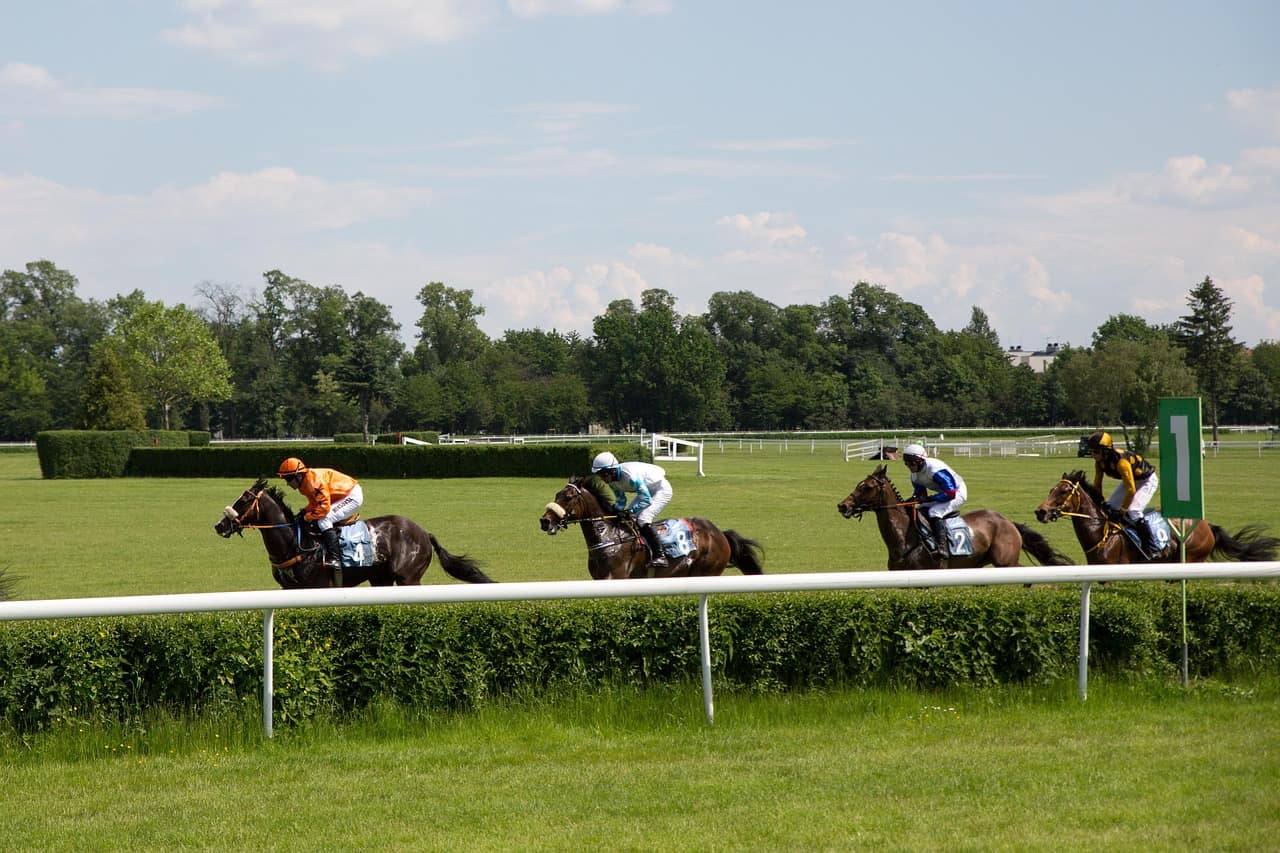
Royal Ascot 2027 takes place from Tuesday 15 to Saturday 19 June 2027 at Ascot Racecourse in Berkshire. Ascot has confirmed the dates on its official Royal Ascot page, and tickets are already on sale. Royal Ascot is the five-day Royal Meeting held at Ascot each June: 35 Flat races, seven a day, including eight Group 1 races, and a Royal Procession before racing every afternoon.
This page sets out the dates, every race on each day, the Group 1 races and what they are, what we know about race times, how to watch on TV, and how betting works on the big handicaps. We don’t publish tips. When the fields are declared next June, we add them to the update log at the bottom.
When Is Royal Ascot 2027?
Ascot lists the 2027 meeting as “Tuesday 15 to Saturday 19 June”, and its ticket pages break that down by day:
| Day | Date | Group 1 races |
|---|---|---|
| Day 1 | Tuesday 15 June 2027 | Queen Anne Stakes, King Charles III Stakes, St James’s Palace Stakes |
| Day 2 | Wednesday 16 June 2027 | Prince of Wales’s Stakes |
| Day 3 | Thursday 17 June 2027 | Gold Cup |
| Day 4 | Friday 18 June 2027 | Commonwealth Cup, Coronation Stakes |
| Day 5 | Saturday 19 June 2027 | Queen Elizabeth II Jubilee Stakes |
The Group 1 races by day come from Ascot’s own Royal Ascot racing guide, which we checked on 2 October 2026. Ascot hadn’t published a 2027 race-by-race running order at that point, so the order could still change; we’ll update this page when it does.
Why Royal Ascot Is Always in June
According to the Ascot Racecourse article on Wikipedia, Royal Ascot is held over five days, “generally in the third week of June”, and the meeting always begins on a Tuesday. That is why 2027 runs Tuesday to Saturday, as 2026 did (16 to 20 June). If you see 2027 dates on unofficial sites, check them against Ascot’s own pages: the racecourse is the only source that counts.
Royal Ascot vs Ascot: What’s the Difference?
Ascot is the racecourse; Royal Ascot is one meeting there. Wikipedia notes that Ascot stages 26 days of racing a year, 18 on the Flat between April and October and 8 over jumps between October and March, and that the Royal Meeting in June “remains the highlight”. Royal Ascot grew out of the first four-day meeting at Ascot in 1768 and took its modern shape with the introduction of the Gold Cup in 1807. Until 1939, it was the only meeting held at the course. The racecourse itself was founded in 1711 by Queen Anne, which is why the opening race of the week carries her name.
Royal Ascot Schedule: Every Race Day by Day
Each day has seven races. Below is the running order Ascot’s racing guide shows for each day, with the Group 1 races in bold. We use the races’ standard names; sponsors can change from year to year.
Day 1: Tuesday 15 June
The Queen Anne Stakes, the Coventry Stakes, the King Charles III Stakes, the St James’s Palace Stakes, the Ascot Stakes, the Wolferton Stakes and the Copper Horse Stakes.
Tuesday has three Group 1 races, with the Queen Anne Stakes opening the week. Ascot’s history of the race says it has been “the opening race of the week since 2008” and lists Frankel and Baaeed among its winners. The King Charles III Stakes is a five-furlong sprint, and the St James’s Palace Stakes is a one-mile Group 1 for three-year-old colts.
Day 2: Wednesday 16 June
The Queen Mary Stakes, the Queen’s Vase, the Duke of Cambridge Stakes, the Prince of Wales’s Stakes, the Royal Hunt Cup, the Kensington Palace Stakes and the Windsor Castle Stakes.
The Prince of Wales’s Stakes over a mile and a quarter is the feature. Ascot’s race page says it “is now worth £1 million in prize money”. Wednesday also has the Royal Hunt Cup, one of the biggest betting handicaps of the year (more on that below).
Day 3: Thursday 17 June
The Chesham Stakes, the King George V Stakes, the Ribblesdale Stakes, the Gold Cup, the Britannia Stakes, the Hampton Court Stakes and the Buckingham Palace Stakes.
Thursday is Gold Cup day. Wikipedia describes the third day as “traditionally the busiest day of the week”, and it is the day colloquially known as Ladies Day. Ascot points out that the race is officially the Gold Cup, “not called the Ascot Gold Cup”. The Britannia, a big-field handicap for three-year-olds, follows it.
Day 4: Friday 18 June
The Albany Stakes, the Commonwealth Cup, the Duke of Edinburgh Stakes, the Coronation Stakes, the Sandringham Stakes, the King Edward VII Stakes and the Palace of Holyroodhouse Stakes.
Friday has two Group 1s for three-year-olds: the Commonwealth Cup, a six-furlong sprint, and the Coronation Stakes, a mile race for fillies that often features winners of the 1,000 Guineas races.
Day 5: Saturday 19 June
The Norfolk Stakes, the Hardwicke Stakes, the Queen Elizabeth II Jubilee Stakes, the Jersey Stakes, the Wokingham Stakes, the Golden Gates Stakes and the Queen Alexandra Stakes.
The week ends with the Queen Elizabeth II Jubilee Stakes, which Ascot calls “Royal Ascot’s most prestigious sprint”. It used to be the Golden Jubilee, Diamond Jubilee and Platinum Jubilee Stakes, and Ascot says it was “permanently renamed in memory of Queen Elizabeth II” in 2023. The Wokingham, a six-furlong handicap that Ascot calls “one of the major betting heats of the season”, comes later on the card.
The Eight Group 1 Races Explained
Ascot’s guide describes Royal Ascot as “Britain’s most valuable race meeting, hosting 35 Flat races throughout the five days including eight Group 1s and a total of 22 Pattern or Listed level events”. Group 1 is the top level of Flat racing, and unlike the handicaps later on each card, these races are not handicaps: the conditions are set by age and sex, as the table shows.
The Eight Races at a Glance
All conditions and 2026 winners below are from each race’s page on ascot.com, checked on 2 October 2026.
| Race | Day | Distance | Age | 2026 winner |
|---|---|---|---|---|
| Queen Anne Stakes | Tuesday | 1 mile | 4yo and up | Ten Bob Tony |
| King Charles III Stakes | Tuesday | 5 furlongs | 3yo and up | Mission Central |
| St James’s Palace Stakes | Tuesday | 1 mile | 3yo colts | Bow Echo |
| Prince of Wales’s Stakes | Wednesday | 1 mile 2 furlongs | 4yo and up | Ombudsman |
| Gold Cup | Thursday | 2 miles 4 furlongs | 4yo and up | Scandinavia |
| Commonwealth Cup | Friday | 6 furlongs | 3yo colts and fillies | Venetian Sun |
| Coronation Stakes | Friday | 1 mile | 3yo fillies | Precise |
| Queen Elizabeth II Jubilee Stakes | Saturday | 6 furlongs | 4yo and up | Almeraq |
If race distances in furlongs are new to you, our guide to how many furlongs are in a mile has the conversions.
The Gold Cup
The Gold Cup is the oldest race at the meeting. Ascot dates it to 1807 and calls it “a stiff test of stamina” at two and a half miles. It has a long record of repeat winners: Ascot notes that Yeats won it four times, the last in 2009, and that Estimate won in 2013 for Queen Elizabeth II, “the first horse to win the Gold Cup for a reigning monarch”.
The Sprints
There are three Group 1 sprints. The King Charles III Stakes over five furlongs was the King’s Stand Stakes until Ascot renamed it “ahead of the 2024 running”. The two six-furlong Group 1s are split by age: the Commonwealth Cup on Friday is for three-year-olds only, and the Queen Elizabeth II Jubilee Stakes on Saturday is for four-year-olds and up.
The Mile Races
Three Group 1s are run over a mile: the Queen Anne for older horses, the St James’s Palace for three-year-old colts, and the Coronation for three-year-old fillies. The St James’s Palace, Ascot says, often attracts horses that have run in the British, French and Irish 2,000 Guineas.
Royal Ascot Race Times and the Royal Procession
Ascot’s race times page says times are “generally available a few months in advance of each raceday”. As of 2 October 2026, the 2027 Royal Ascot times were not yet listed, so treat any 2027 times you see elsewhere as unconfirmed.
What the 2026 Timetable Looked Like
In 2026, the Racing Post’s Royal Ascot guide stated that “the first race of the day is at 2:30pm, on each of the five days”, with the Queen Anne Stakes off at 2.30pm and the Coventry Stakes at 3.05pm on the opening Tuesday. If 2027 follows the same pattern, racing will again start at 2.30pm, but we’ll only confirm the times once Ascot publishes them.
The Royal Procession
Each day starts with the Royal Procession at 2pm. Wikipedia describes it as the monarch and other members of the royal family arriving “down the straight mile in the royal Landaus”, with the National Anthem and the raising of the Royal Standard, a tradition started in 1825 by George IV.
Prize Money
Ascot’s racing guide says the meeting offers “over £10 million of prize money”. For 2026, the Racing Post reported that Royal Ascot would be worth £10.65 million, up from £10.05 million, with all eight Group 1 races worth at least £700,000 and every race run for £120,000 or more. We hadn’t seen a 2027 prize money figure for the Royal Meeting as of 2 October 2026.
How to Watch Royal Ascot on TV
Royal Ascot is shown free-to-air on ITV. In September 2025, ITV announced a new four-year deal for “exclusive, free-to-air coverage of UK horse racing from 2027 until the end of 2030”, and its press release names Royal Ascot as part of it.
Channels and Coverage Times
ITV’s release says live coverage is shown across ITV1, ITV4, STV and STV Player, “all simulcast on ITVX”. In 2026, the Racing Post’s guide said ITV’s daily coverage ran from 1.30pm to 6pm on ITV and ITV4, and that Sky Sports Racing showed every Royal Ascot race live. The 2027 schedule will be confirmed nearer the time.
Watching From the Course
Royal Ascot tickets for 2027 are on sale. Ascot lists the Windsor Enclosure from £25, with “no formal Dress Code” and the option to bring a picnic, and the Queen Anne Enclosure from £80, its “premier public enclosure”. The Royal Enclosure is “open exclusively for Members and their guests”. Ascot’s site said its Best Price tickets were available until 6 October 2026.
Royal Ascot Dress Code in Brief
We’re a betting site, not a fashion guide, so here is the short version. Wikipedia sums up the rules by enclosure:
- Royal Enclosure: grey, navy or black morning dress and top hat for men; formal daywear and a hat with a solid base of 4 inches or more for women.
- Queen Anne Enclosure: a full-length suit, collared shirt and tie for men; a hat or fascinator at all times for women.
- Windsor Enclosure: no formal dress code, though “smart daywear” is encouraged.
Ascot publishes the full rules for each enclosure on its site, and they are the ones that apply on the gate.
Royal Ascot Betting: Each Way, Big Handicaps and Ante-Post
Royal Ascot betting is dominated by two types of race: the Group 1s, where the best horses meet at level weights, and the big heritage handicaps, where large fields and long prices make each way betting the norm.
The Big Handicaps
Three handicaps stand out. Ascot calls the Royal Hunt Cup (Wednesday, one mile) “one of the biggest betting races of the season”, run by “a maximum field” up the Straight Mile. The Britannia (Thursday) is run over the same straight mile for three-year-old colts and geldings. The Wokingham (Saturday, six furlongs) dates from 1813 and is, according to Ascot, “the oldest handicap at Royal Ascot”. All three are heritage handicaps. If you’re unsure how the weights work, read our guide to what a handicap horse race is.
Each Way Terms in a Big Field
As our guide to each way betting sets out, the standard UK terms for a handicap with 16 or more runners are four places at 1/4 of the odds. Some bookmakers offer extra places on big handicaps as a promotion, but that is each firm’s choice, race by race.
Here is a worked example. You bet £10 each way at 20/1 in the Royal Hunt Cup, four places at 1/4 the odds. The bet costs £20, and the place odds are 20/1 x 1/4 = 5/1.
| Result | Win half | Place half | Total return | Profit or loss |
|---|---|---|---|---|
| Wins | £10 x 20 = £200, plus £10 stake = £210 | £10 x 5 = £50, plus £10 = £60 | £270 | £250 profit |
| 2nd, 3rd or 4th | Loses | £60 | £60 | £40 profit |
| 5th, with a bookmaker paying an extra place | Loses | £60 | £60 | £40 profit |
| 5th on standard terms, or worse | Loses | Loses | £0 | £20 loss |
The extra place row only applies if your bookmaker is running that offer on that race; otherwise fifth loses. Plug your own odds and terms into our each way calculator to check any bet before you place it.
Ante-Post, Non-Runner No Bet and Rule 4
Bets struck before the final declarations are ante-post bets: the price is often bigger, but if your horse doesn’t run, the stake is normally lost. Non-runner no bet terms, where a bookmaker offers them, refund the stake instead. Our ante-post betting guide covers both, with examples. On the day, if another horse is withdrawn late, bets struck at a fixed price can face a deduction: the Rule 4 calculator works it out. Some bookmakers also offer best odds guaranteed on the day.
Multiples Across the Week
Many punters spread four selections across a day or the week. Our Lucky 15 calculator and Yankee calculator show what each combination of winners and placed horses returns, each way included. Betting is entertainment with a risk of loss: set a budget for the whole week before Tuesday, not one for each day.
Betting on the Course
If you’re going, Ascot says there are “three different ways to place a bet at Ascot”: its Bet With Ascot kiosks, the bookmakers in front of the stands, or a Betfred betting shop on site. Ascot’s Bet With Ascot bets are pool (Tote-style) bets, so the returns depend on the pool rather than a fixed price.
Update Log
We update this page as Royal Ascot 2027 approaches. Dates are when we checked the official sources.
- 2 October 2026: Page published with the 2027 dates (Tuesday 15 to Saturday 19 June 2027) from Ascot’s official Royal Ascot page, the race list and Group 1 conditions from Ascot’s racing guide and race pages, and the ITV broadcasting deal for 2027 to 2030. Race times for 2027 were not yet published.
- Next update: when Ascot publishes the 2027 race times, and again after the declarations for each day in June 2027, when we add the confirmed fields.
Frequently asked questions
Royal Ascot 2027 runs from Tuesday 15 June to Saturday 19 June 2027, according to Ascot Racecourse. It is five consecutive days of Flat racing in Berkshire, with seven races each afternoon and the Gold Cup on the Thursday, 17 June.
Ascot is the racecourse, which races on 26 days a year over jumps and on the Flat. Royal Ascot is its most famous fixture: the five-day Royal Meeting each June, attended by the royal family, with a daily Royal Procession and eight Group 1 races.
There are 35 races, seven a day. Tuesday has three Group 1s, Wednesday the Prince of Wales's Stakes, Thursday the Gold Cup, Friday the Commonwealth Cup and Coronation Stakes, and Saturday the Queen Elizabeth II Jubilee Stakes. Ascot had not yet published 2027 race times.
At Royal Ascot, Thursday is usually regarded as the biggest day. It is Gold Cup day, the meeting's oldest race, and is traditionally the busiest day of the week. Away from the Royal Meeting, the King George VI and Queen Elizabeth Stakes in July is Ascot's other major summer fixture.
June. The Royal Meeting is held over five days starting on a Tuesday, usually in the third week of the month. In 2027 that means 15 to 19 June; in 2026 it was 16 to 20 June. Ascot's other summer highlight, the King George, follows in July.
On course, Ascot offers three options: its own Bet With Ascot kiosks, which take pool bets, the on-course bookmakers in front of the stands, and a Betfred betting shop. Off course, any licensed bookmaker will price the Royal Ascot races. Only bet if you are 18 or over.