Breeders' Cup 2026: Dates, Races and UK Times at Keeneland
By the MyHorseBets team · Updated · 10 min read
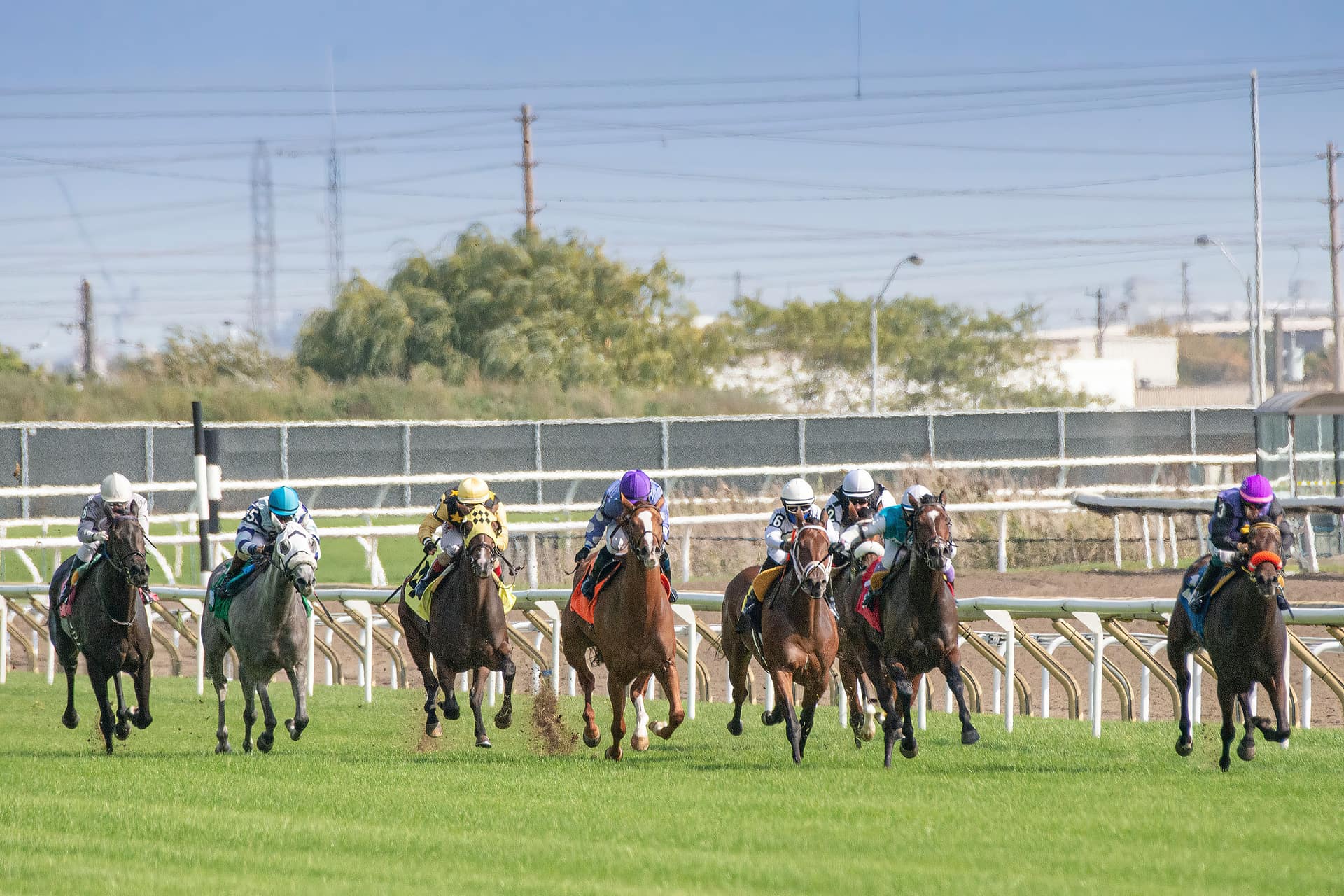
The Breeders’ Cup 2026 takes place on Friday 30 and Saturday 31 October 2026 at Keeneland in Lexington, Kentucky. The Breeders’ Cup World Championships are 14 Grade 1 races over two days, worth more than $34 million in total, and they close the international Flat season. The official site lists the dates as “Oct. 30-31, 2026”, and the Breeders’ Cup announced in May 2025 that Keeneland would host for the fourth time, after 2015, 2020 and 2022.
For British and Irish racing fans, the Breeders’ Cup is the meeting where the best European turf horses take on the Americans, usually late in the evening on UK clocks. This guide covers the 2026 dates and UK times, every race, how horses qualify (including from Royal Ascot), Europe’s record, and how betting on the Breeders’ Cup works from the UK. We don’t publish tips.
When Is the Breeders’ Cup 2026?
| Item | Detail |
|---|---|
| Dates | Friday 30 and Saturday 31 October 2026 |
| Course | Keeneland Race Course, Lexington, Kentucky |
| Races | 14, all Grade 1 (five on Friday, nine on Saturday in 2025) |
| Prize money | More than $34 million across the two days (2025 figure) |
| Biggest race | Breeders’ Cup Classic, $7 million |
| Time difference | Kentucky is 4 hours behind the UK that weekend |
| 2027 host | Belmont Park, New York (Breeders’ Cup announcement) |
The Breeders’ Cup notes that the race dates were “pending approval” from the Kentucky Horse Racing and Gaming Corporation when they were announced; the dates on the official site have not changed since.
Breeders’ Cup Times in the UK
This year the clocks help UK viewers. Britain goes back to GMT on Sunday 25 October 2026, while the United States stays on daylight saving time until Sunday 1 November. So on Breeders’ Cup weekend, Kentucky (Eastern Daylight Time) is four hours behind the UK, not the usual five. A race off at 5pm in Lexington is off at 9pm in London. The Breeders’ Cup publishes post times for each race nearer the day, and we will add them here in UK time; with racing running through the Kentucky afternoon, the big Saturday races fall in the UK evening.
Where Is the Breeders’ Cup Held?
The meeting moves around. Wikipedia’s history of the event records that the first Breeders’ Cup was run at Hollywood Park in 1984, that Santa Anita has hosted it most often, and that Woodbine in Canada (1996) is the only host outside the United States. Del Mar staged it in 2024 and 2025, Keeneland has 2026, and the Breeders’ Cup has named the new Belmont Park in New York as host for 2027.
The Keeneland Factor
Keeneland is a racecourse and a bloodstock sales company, and the Breeders’ Cup sits inside its sales calendar. The 2026 announcement placed the Keeneland Championship Sale on Wednesday 28 October, two days before the races, and the November Breeding Stock Sale starting on Tuesday 3 November, immediately after them. Many of the mares and fillies who run on the Friday and Saturday are worth more as breeding stock the week after than any prize they can win.
The 14 Breeders’ Cup Races
Here are the races as they were run at Del Mar in 2025, from the 2025 Breeders’ Cup page on Wikipedia. The same 14 races are run every year, but exact distances can change from track to track, because every course has different start positions. The Breeders’ Cup confirms the 2026 distances and the running order before the meeting.
Friday: Future Stars Friday
Friday is for two-year-olds. Wikipedia notes that the Friday card was branded “Future Stars Friday” from 2018, with all five juvenile races.
| Race | 2025 distance | Surface | Purse | 2025 winner |
|---|---|---|---|---|
| Juvenile Turf Sprint | 5 furlongs | Turf | $1m | Cy Fair |
| Juvenile Fillies | 1 1/16 miles | Dirt | $2m | Super Corredora |
| Juvenile Fillies Turf | 1 mile | Turf | $1m | Balantina |
| Juvenile | 1 1/16 miles | Dirt | $2m | Ted Noffey |
| Juvenile Turf | 1 mile | Turf | $1m | Gstaad |
Saturday: Championship Day
| Race | 2025 distance | Surface | Purse | 2025 winner |
|---|---|---|---|---|
| Filly and Mare Sprint | 7 furlongs | Dirt | $1m | Splendora |
| Turf Sprint | 5 furlongs | Turf | $1m | Shisospicy |
| Sprint | 6 furlongs | Dirt | $2m | Bentornato |
| Distaff | 1 1/8 miles | Dirt | $2m | Scylla |
| Turf | 1 1/2 miles | Turf | $5m | Ethical Diamond |
| Classic | 1 1/4 miles | Dirt | $7m | Forever Young |
| Mile | 1 mile | Turf | $2m | Notable Speech |
| Dirt Mile | 1 mile | Dirt | $1m | Nysos |
| Filly and Mare Turf | 1 3/8 miles | Turf | $2m | Gezora |
If you think in furlongs, a mile and a quarter is ten furlongs, the same trip as the Coral-Eclipse or the Kentucky Derby; our furlongs to miles guide has a converter for the rest.
The Classic and the Turf
The Breeders’ Cup Classic is the richest race of the meeting, at $7 million. Wikipedia records that the purse was raised from $5 million to $6 million in 2016 and then to $7 million. It is run on dirt, which is why European winners are rare; in 2025 it went to Japan for the first time, when Forever Young won at Del Mar. The Breeders’ Cup Turf, at a mile and a half on grass and worth $5 million, is the race most often aimed at by Europe’s best middle-distance horses after the Arc.
Dirt vs Turf: Why It Matters for European Horses
British and Irish horses race almost entirely on turf at home, with all-weather tracks the only artificial surface. American dirt is a different game: horses get kickback (dirt thrown up into their faces) and the races are usually run fast from the start. That is why European runners cluster in the turf races, the Mile, the Turf, the Filly and Mare Turf and the juvenile turf races, and why a European winner of a dirt race is big news.
How Horses Get Into the Breeders’ Cup
Each race has a maximum field size, so places are earned. There are three routes.
Win and You’re In: the Challenge Series
Thoroughbred Daily News reported that 14 countries host “Win and You’re In” qualifiers for 2026, including England, Ireland and France. Win one and you get a guaranteed starting place in the matching Breeders’ Cup race, with the entry fees paid. Four of the qualifiers are at Royal Ascot, according to America’s Best Racing:
- Queen Anne Stakes qualifies for the Breeders’ Cup Mile.
- King Charles III Stakes qualifies for the Turf Sprint.
- Prince of Wales’s Stakes qualifies for the Turf.
- Norfolk Stakes qualifies for the Juvenile Turf Sprint.
Our guide to Royal Ascot has the dates of those races for 2027.
Points, Experts and the Pre-Entry Deadline
Horses that have not won a Challenge race are ranked, according to Wikipedia, by points earned in graded stakes races and by a panel of experts. The Breeders’ Cup reported that Challenge winners must be nominated to the Breeders’ Cup programme by the pre-entry deadline in mid-October to claim their rewards.
Travel Money for Overseas Runners
The Breeders’ Cup pays a $40,000 travel allowance to the connections of starters based outside North America, and $10,000 to North American starters based outside Kentucky, as reported by Thoroughbred Daily News. For a British or Irish yard, that covers a large part of flying a horse across the Atlantic.
Europe at the Breeders’ Cup
European trainers have a strong record, mostly in the turf races. Wikipedia’s list of leading trainers puts Aidan O’Brien level with Bob Baffert on 21 Breeders’ Cup wins. Two European mares stand out in the records:
- Goldikova won the Breeders’ Cup Mile three years running, in 2008, 2009 and 2010.
- Ouija Board won the Filly and Mare Turf twice, in 2004 and 2006.
Among the 2025 winners at Del Mar, five were bred in Britain, Ireland or France: Balantina, Gstaad, Ethical Diamond, Notable Speech and Gezora. Wikipedia also lists Galileo, the Irish stallion, as the leading sire by Breeders’ Cup earnings.
Getting There: Shipping and Timing
European horses fly in during the week of the meeting and have to cope with the trip, a new climate and an unfamiliar track. In 2026 the Breeders’ Cup comes four weeks after the Arc, which is run on the first Sunday in October, so most European runners have had a long season by the time they line up.
How to Bet on the Breeders’ Cup From the UK
You can bet on the Breeders’ Cup in two very different ways from Britain: with a UK bookmaker at fixed odds, or into the American pools, where they are available. Only bet if you are 18 or over.
Fixed Odds vs US Pari-Mutuel Pools
UK bookmakers price every Breeders’ Cup race in fractional or decimal odds, with ante-post markets for the big races and a full market once the fields are drawn. At American racetracks, betting is pari-mutuel: the payout depends on the size of the pool after the track takes its cut, and the final odds are only known when the race starts. American odds are also written differently (+500, or 5-1 on the tote board). Our odds converter turns American, fractional and decimal odds into each other.
Each Way Terms
Breeders’ Cup races are not handicaps, and most fields have between 8 and 14 runners. Under the standard UK terms set out in our guide to each way betting, that means three places at 1/5 of the odds for eight or more runners (fewer places in smaller fields). Bookmakers can offer better terms on individual races.
Worked example: £5 each way at 10/1 in the Breeders’ Cup Turf (a £10 stake), three places at 1/5. The place odds are 10/1 x 1/5 = 2/1.
| Result | Win half | Place half | Total return | Profit or loss |
|---|---|---|---|---|
| Wins | £5 x 10 = £50, plus £5 = £55 | £5 x 2 = £10, plus £5 = £15 | £70 | £60 profit |
| 2nd or 3rd | Loses | £15 | £15 | £5 profit |
| 4th or worse | Loses | Loses | £0 | £10 loss |
Run your own prices through the each way calculator.
Exotic Bets: Exacta, Trifecta and Pick 4
American racing is built around exotic bets: the exacta (first and second in order, like a straight forecast), the trifecta (first three in order, like a tricast) and multi-race bets such as the Pick 4. Our guide to how to bet a trifecta explains boxes and keys, and the forecast calculator shows how many combinations a reverse forecast or combination tricast covers, which is the same arithmetic.
Ante-Post Bets on the Big Races
Prices on the Classic and the Turf are available weeks ahead, but a horse that is not entered or is withdrawn loses you the stake unless your bookmaker offers non-runner no bet. Our guide to ante-post betting covers how that works and when it pays to wait.
The Breeders' Cup is 14 races in two evenings, many at short notice and late at night in the UK. Set a budget for the weekend, bet only what you can afford to lose and never chase losses. Gambling responsibly.
Update Log
- 9 October 2026: Page published. Dates (30 and 31 October 2026) from breederscup.com; Keeneland as host and Belmont Park for 2027 from the Breeders’ Cup’s own announcement; 2025 races, distances and winners from the 2025 Breeders’ Cup record; qualifiers and travel allowances from Thoroughbred Daily News and America’s Best Racing. Post times and fields for 2026 were not yet published.
- Next update: after pre-entries and the draw, with the post times in UK time.
Frequently asked questions
At Keeneland Race Course in Lexington, Kentucky, on Friday 30 and Saturday 31 October 2026. It is Keeneland's fourth time as host, after 2015, 2020 and 2022. The 2027 Breeders' Cup moves to the new Belmont Park in New York.
On Breeders' Cup weekend Kentucky is four hours behind the UK, because Britain has already gone back to GMT and the US changes on 1 November. Racing runs through the late afternoon and evening UK time, with the Classic one of the last races on Saturday night.
Fourteen, all Grade 1. In 2025 five juvenile races were run on the Friday and nine on the Saturday, with the $7 million Classic and the $5 million Turf the richest. Total prize money was more than $34 million.
Yes. The Win and You're In series includes races in England and Ireland. At Royal Ascot, the Queen Anne, King Charles III, Prince of Wales's and Norfolk Stakes each give the winner a guaranteed, fees-paid place in a matching Breeders' Cup race.
Aidan O'Brien and Bob Baffert share the record with 21 wins each, according to the Breeders' Cup's trainer standings as listed on Wikipedia. O'Brien's wins have come mainly in the turf and juvenile races, where European horses do best.