How Fast Can a Horse Run? Top Speeds, Records and Race Times
By the MyHorseBets team · Updated · 10 min read
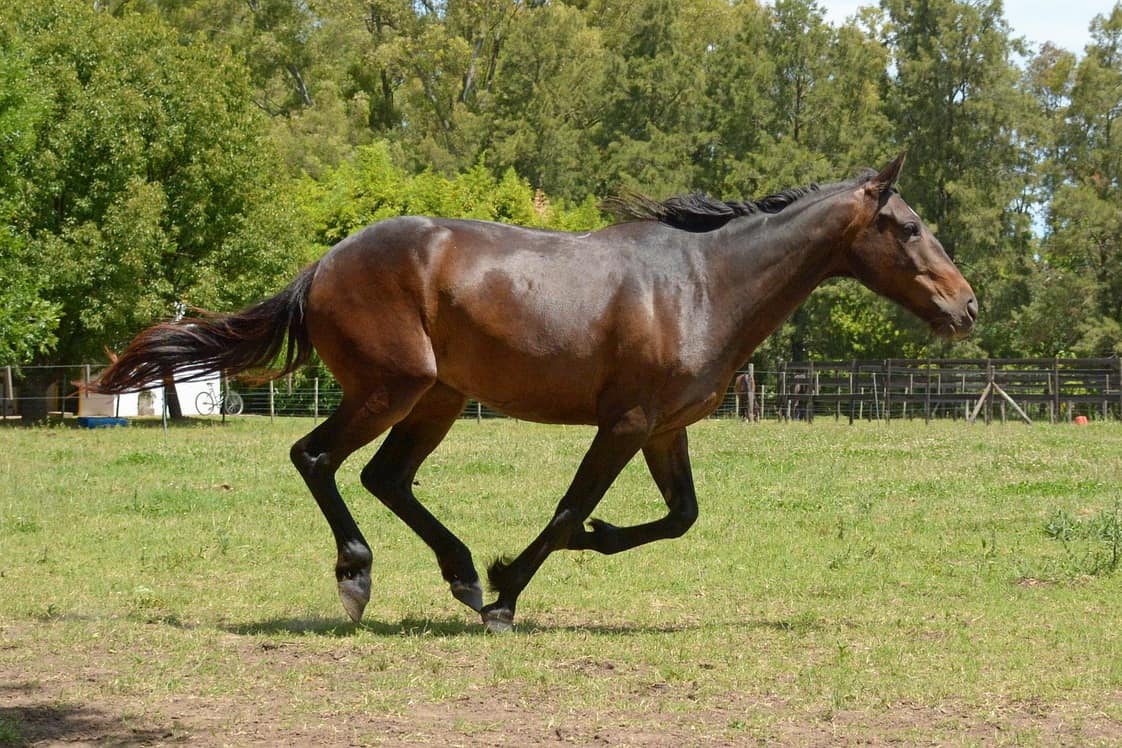
How fast can a horse run? The fastest race speed ever recorded is 43.97mph (70.76km/h), set by the Thoroughbred Winning Brew over two furlongs in 2008, and American Quarter Horses have been clocked at close to 55mph over a quarter of a mile. An ordinary horse galloping in a field averages about 25 to 30mph. Over a full race distance, top racehorses average between about 36mph in a long-distance race and 42mph in the fastest five-furlong sprints.
This guide answers the question with sourced numbers rather than round guesses: speeds at each gait, the official records, real race times turned into miles per hour, how long a horse can keep galloping, and a quick way to convert any race time into a speed yourself. We also deal with the 70mph and 100mph claims that turn up in search results.
How Fast Can a Horse Run? The Short Answer
| Horse or situation | Speed | Source |
|---|---|---|
| Average gallop, any horse | 25 to 30mph (40 to 48km/h) | Wikipedia, Horse gait |
| Thoroughbred race record (2 furlongs) | 43.97mph (70.76km/h) | Guinness World Records, via the Jockey Club |
| Fastest five furlongs (whole race) | 41.9mph average | Our calculation from the 53.69s record |
| Quarter Horse sprint (quarter mile or less) | Approaching 55mph (88.5km/h) | Wikipedia, Horse gait |
| Kentucky Derby record (10 furlongs) | 37.7mph average | Our calculation from Secretariat’s 1:59.40 |
The Record: Winning Brew
The Jockey Club’s guide to how fast racehorses are says: “The highest race speed in recorded history, recorded over two furlongs, is 70.76km/h.” It was set by Winning Brew in May 2008 at Penn National in Pennsylvania, USA. That converts to 43.97mph, or about 19.7 metres every second. The Jockey Club also notes that racehorses can cover 100 metres in about half the time the fastest humans take.
Quarter Horses: the Sprinters
The American Quarter Horse is bred for very short races, and that is where the highest speeds are found. The Wikipedia article on horse gaits says the breed has been clocked “approaching 55 miles per hour (88.5 km/h)” in sprints of a quarter of a mile or less. Thoroughbreds are slower off the mark but hold their speed over much longer distances, which is why they dominate races from five furlongs to two and a half miles.
Can a Horse Run 70 or 100mph?
No. Search results throw up claims of 60, 70 and even 100mph, but no recorded horse comes close. The fastest figures above are just under 44mph for a Thoroughbred in a race and just under 55mph for a Quarter Horse over a very short sprint. A horse at 70mph would be running about 60% faster than the Guinness record holder. If you see a figure like that, it is usually a confusion with kilometres per hour: 70km/h is the record, and that is about 44mph.
Horse Speed by Gait
Every horse has four natural gaits, and each has a typical speed. Sources give slightly different ranges, so here are two side by side.
| Gait | Beats | Montana State University Extension | Wikipedia, Horse gait |
|---|---|---|---|
| Walk | 4 | 3.5 to 5mph | About 4.3mph (7km/h) |
| Trot | 2 (diagonal pairs) | 7 to 10mph, extended 10 to 30mph | About 8.1mph (13km/h) |
| Canter | 3 | 6 to 10mph | 10 to 17mph (16 to 27km/h) |
| Gallop | 4 | 12 to 20mph | 25 to 30mph (40 to 48km/h) |
Walk and Trot
The Montana State University Extension guide to horse locomotion describes the walk as a four-beat gait, with each foot landing at a different time, and the trot as a two-beat gait, where diagonal pairs of legs move together. Most riding is done at these two gaits, and they are the speeds you see in the parade ring and on the way to the start.
Canter and Gallop
The canter is a three-beat gait, and the gallop is a four-beat gait in which, Montana State explains, the hind foot of each diagonal pair lands just before the front foot. The two sources differ most on the gallop: 12 to 20mph is a working gallop for a riding horse, while 25 to 30mph is closer to a fit horse going flat out. A racehorse at full stretch in a race goes faster still, as the race times below show.
With a Rider and Without
Racing records are all set with a jockey on board, so a rider clearly doesn’t stop a horse reaching 40mph and more. Weight does matter at the margins: that is the whole basis of handicap racing, where better horses carry more to slow them down. Our guide to what a handicap horse race is explains how ratings are turned into weights. A loose horse with no rider often looks faster in a race because it is carrying nothing, but loose horses are not timed, so there is no reliable figure.
Race Speeds: Real Times Turned Into mph
Here is where the “how fast” question gets interesting for racing fans. We took record or famous times from official and recorded sources and worked out the average speed over the whole race. These are averages from start to finish, including the start from the stalls, so the top speed during each race was higher.
| Race and horse | Distance | Time | Average speed | Seconds per furlong |
|---|---|---|---|---|
| 5f record, Stone of Folca, Epsom, 2012 | 5 furlongs (1,006m) | 53.69s | 41.9mph (67.4km/h) | 10.74 |
| Kentucky Derby record, Secretariat, 1973 | 10 furlongs (2,012m) | 1:59.40 | 37.7mph (60.7km/h) | 11.94 |
| Melbourne Cup record, Kingston Rule, 1990 | 3,200m (15.9 furlongs) | 3:16.30 | 36.5mph (58.7km/h) | 12.34 |
| Epsom Derby record, Workforce, 2010 | 1m 4f 6y (2,419m) | 2:31.33 | 35.8mph (57.6km/h) | 12.58 |
Sources for the times: Guinness World Records and Wikipedia’s Epsom Dash entry for Stone of Folca; Wikipedia’s Kentucky Derby and Melbourne Cup records; Wikipedia’s Epsom Derby records for Workforce, as set out in our Epsom Derby guide.
The Fastest Five Furlongs in the World
Guinness World Records lists Stone of Folca’s 53.69 seconds in the Epsom Dash on 2 June 2012, ridden by Luke Morris and trained by John Best, as the fastest five furlongs, and notes that it beat the previous record, set by Spark Chief in 1983, by 0.01 seconds. Wikipedia’s entry on the race notes that Epsom’s five-furlong course runs downhill until the last 100 yards, which helps explain why the record was set there. The Jockey Club describes the Dash as “one of the sport’s fastest races”.
Sprinters vs Stayers
The table shows a clear pattern: the longer the race, the lower the average speed. A five-furlong sprinter averages close to 42mph; a Derby winner over a mile and a half averages about 36mph. That is partly fatigue and partly tactics: middle-distance and staying races often start steadily and finish fast, while sprints are flat out from the stalls. Our Melbourne Cup guide and Kentucky Derby guide cover those two races in full.
Flat vs Jumps
Jumps races are run more slowly than Flat races. National Hunt horses carry more weight (the BHA’s minimum over jumps is 10st 2lb, against 8st 2lb on the Flat, as our jumps guide sets out), race over longer trips, and have to measure their stride for each hurdle or fence. Our guide to National Hunt racing explains the differences between hurdles, chases and the Flat.
How Far Can a Horse Run at Full Speed?
Not very far. Wikipedia’s gait article says horses “seldom gallop more than 1.5 to 3 km (0.9 to 2 miles) before they need to rest”, although a steadier pace can be kept up for much longer. It also notes that modern Thoroughbred races are seldom longer than a mile and a half, and that some Arabians race up to two and a half miles.
Why Jockeys Ride for Position First
Because no horse can sprint for a whole race, jockeys ride to conserve energy and time their finishing run. A horse that goes too fast early, through the first two or three furlongs, usually slows badly in the final furlong. Form readers spot it in race comments such as “led, weakened final furlong”. Our guide to how to read horse racing form explains those comments and the abbreviations.
Are Male or Female Horses Faster?
Racing rules assume colts are slightly faster. In the Kentucky Derby, colts and geldings carry 126lb and fillies 121lb, according to Wikipedia, a 5lb allowance that exists to level the field. The Epsom Derby has a fillies’ allowance too, as our guide to handicap races explains. But plenty of fillies and mares beat the colts: Makybe Diva won the Melbourne Cup three times.
Work Out Any Horse’s Speed Yourself
You can turn any race time into a speed with one number, 450. A furlong is 201.168 metres, and 201.168 metres per second is almost exactly 450mph. So:
Speed in mph = 450 divided by the seconds per furlong.
| Seconds per furlong | Speed (mph) | Speed (km/h) | What it looks like |
|---|---|---|---|
| 10 | 45.0 | 72.4 | Faster than any full race on record |
| 11 | 40.9 | 65.8 | A very fast five or six furlong sprint |
| 12 | 37.5 | 60.4 | A fast mile to ten furlongs |
| 13 | 34.6 | 55.7 | A typical middle-distance or staying race |
| 14 | 32.1 | 51.7 | A slow-run race or soft ground |
| 15 | 30.0 | 48.3 | Heavy ground, or a long jumps race |
A Worked Example
A horse wins a one-mile race (eight furlongs) in 1 minute 38 seconds. That is 98 seconds over eight furlongs: 98 ÷ 8 = 12.25 seconds per furlong. Then 450 ÷ 12.25 = 36.7mph on average. If you need to convert other distances first, our furlongs to miles converter does it, and our horse racing terms glossary explains words such as “going” that you’ll meet in race results.
Speed Ratings in the Form
Some form guides publish speed figures built from race times. The Racing Post’s Topspeed rating, for example, is based on the time a horse ran rather than on which horses it beat, as we explain in our form guide. These figures adjust for the going and the course, so they are better than raw times for comparing horses. They help you judge a race; they don’t predict one.
Fast times and speed figures describe past runs, not future results. If you bet, set a budget first and only bet what you can afford to lose. Gambling responsibly.
Frequently asked questions
Winning Brew holds the record for the highest race speed: 70.76km/h, or 43.97mph, over two furlongs at Penn National in May 2008, according to the Jockey Club and Guinness World Records. Over five furlongs, Stone of Folca's 53.69 seconds at Epsom in 2012 is the record.
No. The fastest recorded Thoroughbred race speed is 43.97mph, and Quarter Horses have been clocked approaching 55mph over very short sprints. The 70 figure is the record in kilometres per hour, 70.76km/h, which is often mistaken for miles per hour.
The American Quarter Horse. Bred for sprints of a quarter of a mile or less, it has been clocked approaching 55mph, or 88.5km/h, over that distance. Over longer races Thoroughbreds are faster, because Quarter Horses can't hold that speed beyond a short dash.
All racing records are set with a rider, so a fit racehorse with a jockey can average around 36 to 42mph over a race and reach about 44mph at its peak. A riding horse carrying an adult gallops at roughly 25 to 30mph, depending on fitness and ground.
At a full gallop, usually only 1.5 to 3km (about one to two miles) before it needs a breather. At a steadier canter or trot, a fit horse can keep going much longer, which is how endurance horses cover long distances in a day.