Going in Horse Racing: The Going Scale and How It Affects Your Bets
By the MyHorseBets team · Updated · 8 min read
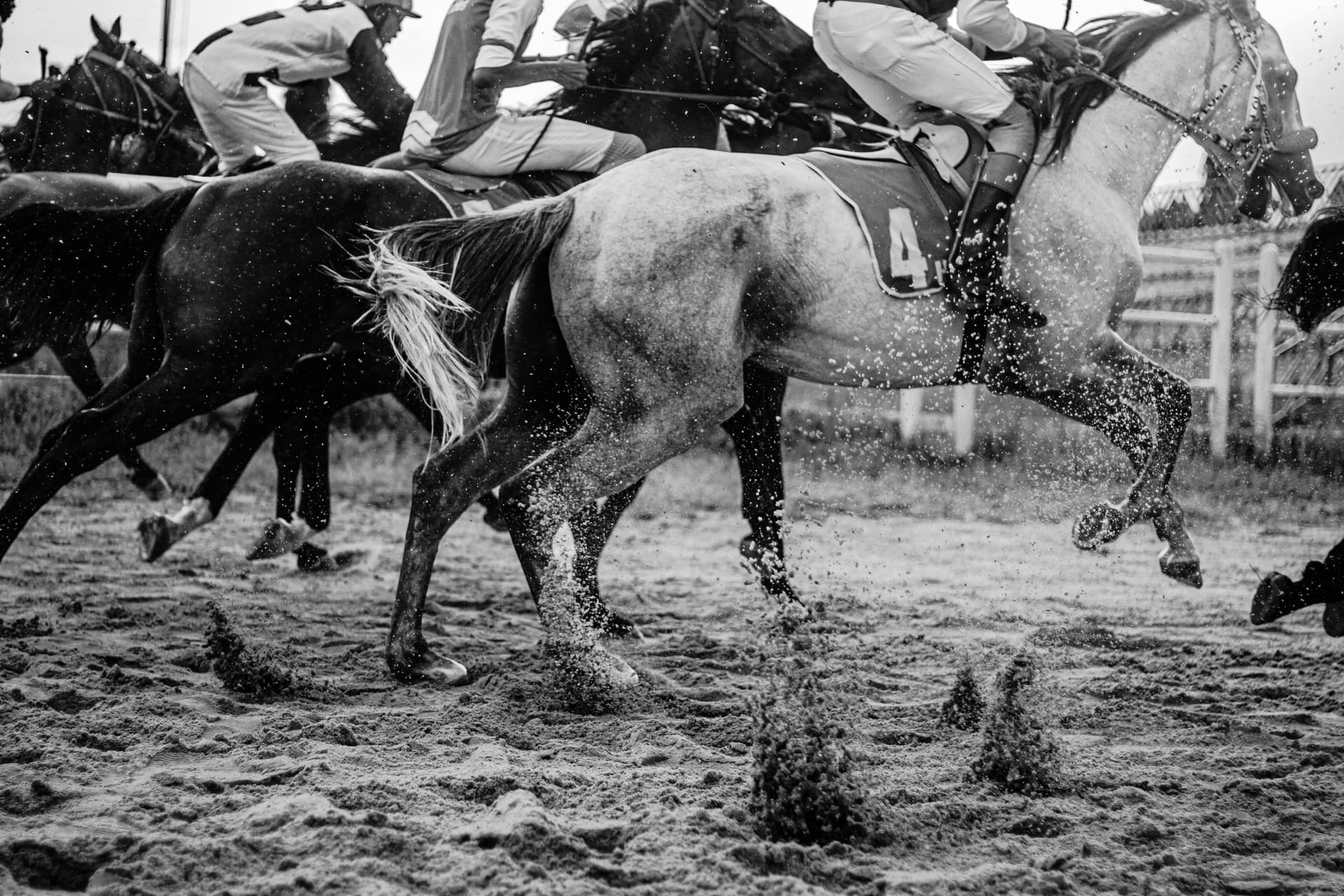
The going in horse racing is the official description of the ground a race is run on: how wet or dry, soft or firm the track is. In Britain the going runs from heavy (wettest) through soft, good to soft, good and good to firm to firm and, rarely, hard, and all-weather tracks have their own scale from slow to fast. The going matters because it changes how fast races are run, which horses are suited, and whether some horses run at all, and that makes it one of the first things to check before you bet.
This guide sets out the official going chart, the all-weather and international equivalents, how the going is measured with the GoingStick, what different going does to race times, and how the going affects betting: form, non-runners, Rule 4 and abandonments.
The Going Chart: Official Descriptions in Britain
The Jockey Club’s guide to the going lists the descriptions used in British racing, and the Wikipedia article on going adds the seventh, hard, which is rarely used. From wettest to driest:
| Going | What it means | Mean GoingStick, Flat | Mean GoingStick, Jumps |
|---|---|---|---|
| Heavy | Saturated, very testing ground | 5.7 | 5.2 |
| Soft | Wet, slower ground | 6.4 | 6.0 |
| Good to soft | Some give in the ground | 7.1 | 6.8 |
| Good | The middle of the scale | 7.9 | 7.7 |
| Good to firm | Quick ground with some cushion | 8.6 | 8.7 |
| Firm | Dry, fast ground | 9.9 | 10.0 |
| Hard | Rarely used | No readings | No readings |
The GoingStick figures are the BHA’s averages for all British fixtures from 2008 to 2013. The BHA is clear that this “is not an official scale and should not be used to give a specific indication of the Going at any individual course”, but the averages show how the numbers rise as the ground firms up. Wikipedia notes that hard is considered dangerous, and the BHA’s figures show no races on hard going in those six years.
Mixed Descriptions
Ground isn’t always the same all the way round. The Jockey Club gives examples such as “Soft (Good to Soft in places)” and “Soft (Heavy in places)”. The first description is the main one; the part in brackets flags sections riding differently, often a bend or a low-lying stretch. The BHA’s statistics use the first, predominant description.
Watering
The Jockey Club notes that the clerk of the course can water the track to soften firm ground, and that the going report may say “watering”. On a dry summer course, watered ground can ride differently from what the forecast suggests.
All-Weather and International Going
All-Weather Tracks
British all-weather (artificial) surfaces have their own five-step scale, according to Wikipedia: fast, standard to fast, standard, standard to slow and slow. Our guide to UK racecourses shows which courses race on artificial surfaces.
Ireland, the United States and Elsewhere
| Country and surface | Going terms |
|---|---|
| Ireland, turf | As Britain, with “yielding” used for good to soft |
| United States, dirt | Fast, wet fast, good, muddy, sloppy, slow, sealed |
| United States, turf | Firm, good, yielding, soft, heavy |
Source: Wikipedia’s going article. If you bet on American racing, such as the Kentucky Derby or the Breeders’ Cup, “fast” on dirt is the equivalent of good, quick ground, while “sloppy” means standing water on top of a firm base.
How the Going Is Measured
The Clerk of the Course
The official going is the clerk of the course’s description of the ground, now published alongside an objective GoingStick reading. It is published days before racing and updated on the day, so the going can change between when you bet and when the race is run.
The GoingStick
The BHA explains that since January 2009 the Rules of Racing have required racecourses to publish a GoingStick reading at the declaration stage, a few days before racing, and again on race day, alongside the official going description. The GoingStick was developed by Cranfield University and TurfTrax and gives an objective number, which is most useful when compared with the same course’s past readings rather than with other courses.
Why Two Courses With the Same Going Can Ride Differently
Courses drain differently, have different grass and soil, and some are uphill or undulating. A reading of 7.5 at one course isn’t the same as 7.5 at another, which is why the BHA says readings are “specific to an individual racecourse”. Form on “good” ground at a flat, fast course doesn’t always carry over to “good” at a stiff, uphill one.
How the Going Changes Race Times
Softer ground makes races slower, and the difference is large. The clearest example we have is the Epsom Derby, run over the same mile and a half:
| Race | Going | Winning time | Average speed |
|---|---|---|---|
| Epsom Derby record, Workforce, 2010 | The fastest Derby on record | 2:31.33 | 35.8mph |
| Epsom Derby 2026 | Soft | 2:43.75 | 33.1mph |
The 2026 Derby, run on soft ground, took 12.42 seconds longer than the record: at the 2026 winner’s average pace, that is about 180 metres of ground. Both times are from the race records in our Epsom Derby guide, and our guide to how fast a horse can run shows how to turn any time into a speed.
Stamina vs Speed
On soft and heavy ground every stride takes more effort, so races become tests of stamina and strength. On good to firm and firm, pure speed counts for more. That’s why the same two horses can finish in a different order on different going.
Preferences You Can See in the Form
The Jockey Club describes horses as “acting on the ground” when the going suits them. You can spot preferences in a horse’s record: our guide to how to read horse racing form explains how to check the going for each past run, and if every win came on soft ground, a dry week is a warning sign.
How the Going Affects Your Bets
The going matters to punters in four ways.
1. Picking a Selection
Check the going for the day, then check whether your horse has form on similar ground. A horse stepping onto ground it has never run on is an unknown, which is a reason to bet smaller, not a reason to assume it will handle it.
2. Non-Runners and Rule 4
When the ground changes, trainers often withdraw horses that won’t act on it, sometimes on the morning of the race. If you took a fixed price before a horse was withdrawn, your winnings can be reduced by a Rule 4 deduction, depending on the price of the horse that came out. Our Rule 4 calculator works out exactly what you’ll be paid.
3. Ante-Post Bets
The going is unknown weeks ahead. An ante-post bet on a horse that needs soft ground is exposed to a dry spring, and if the horse doesn’t run, the stake is usually lost unless your bookmaker offers non-runner no bet. Our ante-post betting guide covers the trade-off.
4. Abandonments and Inspections
Heavy rain, frost or waterlogging can lead to an inspection and, if the ground is unsafe, an abandonment. Bets on races that are abandoned are normally void and stakes returned, but check your bookmaker’s rules. Our guide to whether horse racing is cancelled in the rain explains how inspections work.
Each Way Terms Don’t Change With the Going
Place terms depend on the number of runners and the type of race, not the ground. But because ground changes cause non-runners, a race can drop below a threshold: an eight-runner non-handicap that loses a horse falls from three places to two, as our each way betting guide explains. The each way calculator handles any terms.
Going and form tell you which horses are suited, not which will win. Set a budget before racing, bet only what you can afford to lose and never chase losses. Gambling responsibly.
Frequently asked questions
The going is the official description of the ground's condition, set by the clerk of the course. In Britain it runs from heavy, the wettest, through soft, good to soft, good and good to firm to firm. It affects how fast races are run and which horses are suited.
A number measured with the GoingStick, a device that tests how firm the turf is. Racecourses have had to publish a reading a few days before racing and on race day since 2009. Higher readings mean firmer ground; the BHA's averages range from about 5 on heavy to about 10 on firm.
Each racecourse publishes its official going and GoingStick reading, and they appear on racecards and in the racing press. The going is first given at the declaration stage and updated on race day, so check again on the morning of the race, especially after rain.
There is no single best going: it depends on the horse. Many horses prefer good ground, and good is in the middle of the scale, but some only show their best on soft or heavy, and others need fast ground. A horse's past form on similar going is the best guide.
Standard is the normal description for an artificial all-weather surface in Britain. The all-weather scale runs fast, standard to fast, standard, standard to slow and slow, according to the going scale Wikipedia sets out. Turf form and all-weather form don't always match, so check a horse's record on the surface.