Irish Grand National 2027: Date, Distance and Past Winners
By the MyHorseBets team · Updated · 10 min read
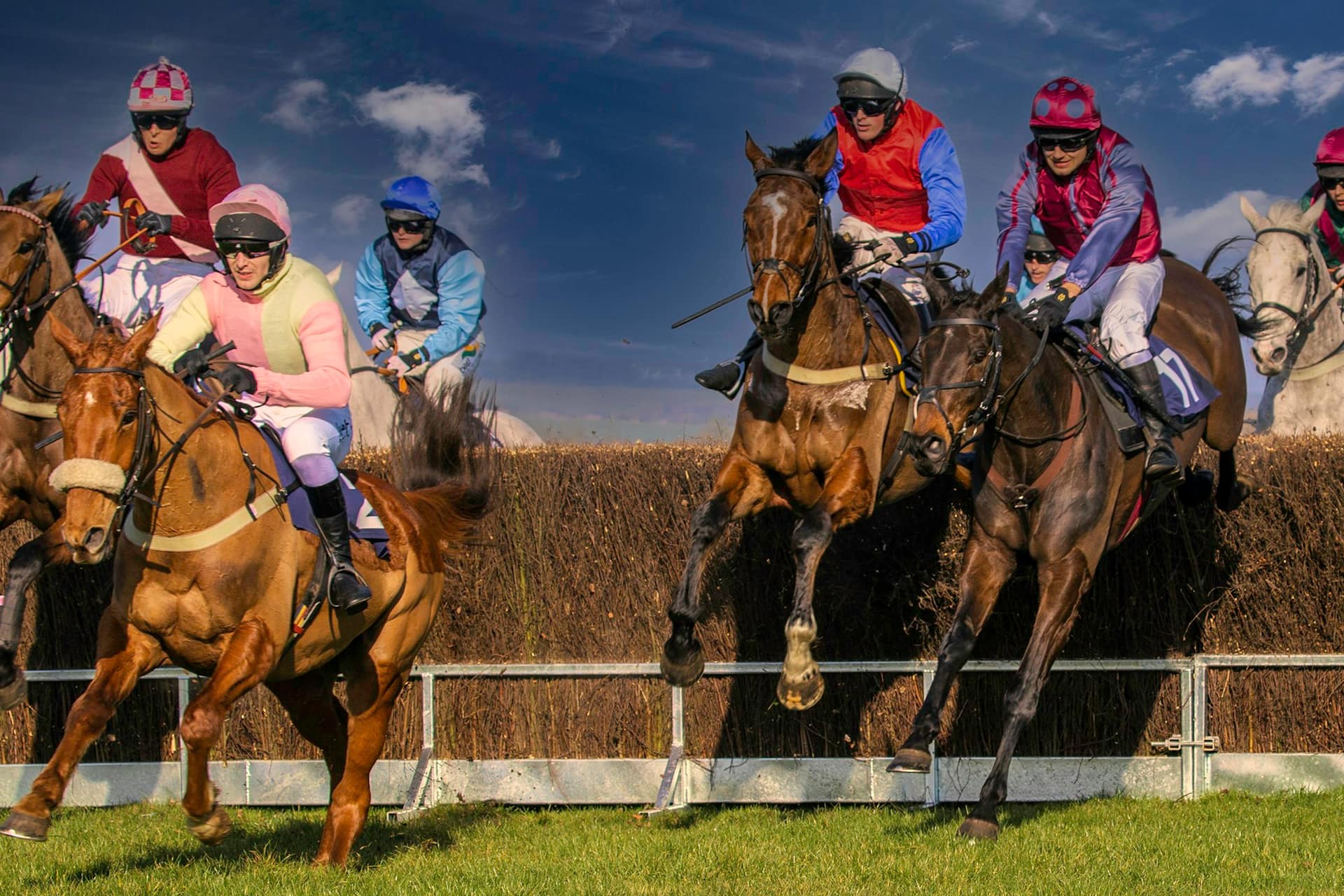
The Irish Grand National 2027 is expected on Easter Monday, 29 March 2027, at Fairyhouse in County Meath. Fairyhouse has published its 2027 Easter Festival as three days, Saturday 27 to Monday 29 March 2027, with the Irish Grand National as the headline race, and the race is always run on Easter Monday. The Irish Grand National is a handicap chase over 3 miles and 5 furlongs with a maximum field of 30, and it is Ireland’s richest jumps race.
This guide covers the date, the race itself, how it compares with the Aintree Grand National twelve days later, recent winners, the British challenge, and how to bet on the Irish Grand National each way. We don’t publish tips.
When Is the Irish Grand National 2027?
| Item | Detail |
|---|---|
| Date | Easter Monday, 29 March 2027 (expected) |
| Meeting | Fairyhouse Easter Festival, Saturday 27 to Monday 29 March 2027 |
| Course | Fairyhouse, County Meath |
| Distance | 3 miles 5 furlongs (5,834 metres) |
| Type | Grade A handicap chase, five-year-olds and up |
| Fences | 24 |
| Maximum field | 30 runners |
| Prize money | €500,000, €270,000 to the winner (2025 figures) |
| 2026 winner | Soldier In Milan |
Why Easter Monday?
The Irish Grand National page on Wikipedia gives Easter Monday as the race’s date at Fairyhouse, and records the first running in 1870. Because Easter moves, so does the race: it was run on 21 April in 2025 and on 6 April in 2026. In 2027 Easter Sunday falls on 28 March, which puts the race on Monday 29 March, more than three weeks earlier than in 2025. Fairyhouse’s 2027 Easter Festival page lists the three days but not yet the race times; we’ll add them when they’re published.
The Fairyhouse Easter Festival
The Irish National is the last day of a three-day festival. In 2026 Fairyhouse reported 18,753 racegoers on National day and 34,985 across the three days. The festival runs Saturday to Monday, with a style day on the Saturday and family racing on Easter Sunday before the National on the Monday.
Irish Grand National vs Aintree: Twelve Days Apart
With the Aintree Grand National scheduled for Saturday 10 April 2027, the two races are only twelve days apart, so few horses run in both. Trainers usually choose one target.
| Irish Grand National | Grand National (Aintree) | |
|---|---|---|
| Course | Fairyhouse, Co. Meath | Aintree, Liverpool |
| 2027 date | Monday 29 March (expected) | Saturday 10 April |
| Distance | 3m 5f | 4m 2½f |
| Fences jumped | 24 | 30 |
| Maximum field | 30 | 34 |
| Famous fences | None named | Becher’s Brook, The Chair, Canal Turn |
Our guide to the Grand National has the full Aintree schedule, the fence measurements and the declaration dates.
How the Irish Grand National Works
A Handicap Chase
Every runner carries a weight set by the Irish handicapper, so the best-rated horse carries the most. That is why the race throws up big-priced winners and why form in other handicaps matters more than form in Graded races. If you’re new to the weights, our guide to what a handicap horse race is explains how ratings become weights, and our introduction to National Hunt racing covers chases, hurdles and the jumps season.
Entries, Weights and the Final Field
The race attracts far more entries than can run. The Irish Field reported 86 entries for the 2025 race, including 11 trained in Britain. The weights are published in the weeks before the race, horses drop out at forfeit stages, and the Racing Post reports the final declarations as a maximum field of 30. Big Irish yards often run several horses: in one recent renewal, the Racing Post’s list of confirmed runners had Gordon Elliott saddling eight of the 30.
Prize Money
The Irish Field put the 2025 prize fund at €500,000, with €270,000 to the winner, and Fairyhouse calls the race “Ireland’s most valuable jumps race”. It has been sponsored by BoyleSports since 2014, according to Wikipedia.
A Short History of the Irish Grand National
The Irish Grand National is older than most of the races it is compared with. Wikipedia’s history of the race records that the first running, in 1870, was won by Sir Robert Peel, for a prize of 167 sovereigns, and that many of the early winners were trained at the Curragh, ten of them by 1882.
The “Dubs’ Day Out”
Easter Monday at Fairyhouse became a fixture of the Dublin calendar early on. Wikipedia notes that the meeting regularly drew racegoers from the city and became known as the “Dubs’ Day Out”. The winners list shows no race in 1919, in 1941 and in 2020, when the Covid-19 pandemic stopped racing in the Republic of Ireland.
The Great Weight-Carriers
Because the Irish National is a handicap, the best horses carry the most weight, and a few champions have won it under big burdens:
| Year | Winner | Weight carried | Age | Trainer |
|---|---|---|---|---|
| 1964 | Arkle | 12st 0lb | 7 | Tom Dreaper |
| 1966 | Flyingbolt | 12st 7lb | 7 | Tom Dreaper |
| 1990 | Desert Orchid | 12st 0lb | 11 | David Elsworth |
| 2015 | Thunder And Roses | 10st 6lb | 7 | Sandra Hughes |
Arkle and Flyingbolt were both ridden by Pat Taaffe for Tom Dreaper, the race’s most successful jockey and trainer. Desert Orchid’s 1990 win under 12st, ridden by Richard Dunwoody, is the other famous one. In 2015 Thunder And Roses won under a light weight with the amateur rider Katie Walsh on board.
Distance and Sponsors
The race was run over 3 miles 4 furlongs until 1991, when it was extended to the current 3 miles 5 furlongs, according to Wikipedia. Irish Distillers sponsored it under various titles until 2010, Ladbrokes from 2011 to 2013, and BoyleSports since 2014.
The Two Nationals Double
Several horses have won both the Irish and the Aintree Grand Nationals, but never in the same year, according to Wikipedia. The first to complete the double was Ascetic’s Silver, who did it with his Aintree win in 1906. With the races now twelve days apart in 2027, the same-season double is as hard as it has ever been.
Irish Grand National Winners Since 2015
| Year | Winner | Jockey | Trainer |
|---|---|---|---|
| 2026 | Soldier In Milan | Donagh Meyler | Emmet Mullins |
| 2025 | Haiti Couleurs | Sean Bowen | Rebecca Curtis |
| 2024 | Intense Raffles | JJ Slevin | Thomas Gibney |
| 2023 | I Am Maximus | Paul Townend | Willie Mullins |
| 2022 | Lord Lariat | PJ O’Hanlon | Dermot McLoughlin |
| 2021 | Freewheelin Dylan | Ricky Doyle | Dermot McLoughlin |
| 2020 | Not run (Covid-19) | ||
| 2019 | Burrows Saint | Ruby Walsh | Willie Mullins |
| 2018 | General Principle | JJ Slevin | Gordon Elliott |
| 2017 | Our Duke | Robbie Power | Jessica Harrington |
| 2016 | Rogue Angel | Ger Fox | Mouse Morris |
| 2015 | Thunder And Roses | Katie Walsh | Sandra Hughes |
Source: the Wikipedia winners list, with 2026 checked against Fairyhouse’s own report.
Soldier In Milan in 2026
Fairyhouse’s report says Soldier In Milan, the 6/1 favourite, won by 16 lengths from Showurappreciation (10/1), “the biggest in Ireland’s most valuable jumps race since Our Duke won by 14 lengths in 2017”. Fairyhouse put the date as Monday 6 April 2026.
The British Challenge
British-trained winners are rare. The Irish Field noted in 2025 that the last overseas winner had been Shutthefrontdoor for Jonjo O’Neill in 2014. A month later, Haiti Couleurs, trained in Britain by Rebecca Curtis, won the 2025 race, after winning the National Hunt Chase at the Cheltenham Festival. Our Cheltenham Festival guide covers that race and the rest of the week.
Records
- Most wins by a horse: Brown Lad, three (1975, 1976 and 1978).
- Leading trainer: Tom Dreaper, ten wins, including Arkle in 1964.
- Leading jockey: Pat Taaffe, six wins, also including Arkle.
- First winner: Sir Robert Peel, in 1870.
How to Bet on the Irish Grand National
UK and Irish bookmakers price the race ante-post from the moment entries are made, and the market reshapes when the weights come out and again after declarations. Only bet if you are 18 or over.
Each Way Terms in a 30-Runner Handicap
As a handicap with 16 or more runners, the race qualifies for the standard UK terms of four places at 1/4 of the odds, as set out in our guide to each way betting. On big handicaps like this, some bookmakers pay extra places as a promotion: check the terms before you bet, because they vary by firm.
Worked example: £5 each way at 25/1 (a £10 stake), four places at 1/4 the odds. The place odds are 25/1 x 1/4 = 25/4, or 6.25/1.
| Result | Win half | Place half | Total return | Profit or loss |
|---|---|---|---|---|
| Wins | £5 x 25 = £125, plus £5 = £130 | £5 x 6.25 = £31.25, plus £5 = £36.25 | £166.25 | £156.25 profit |
| 2nd, 3rd or 4th | Loses | £36.25 | £36.25 | £26.25 profit |
| 5th, with an extra place offer | Loses | £36.25 | £36.25 | £26.25 profit |
| 5th on standard terms, or worse | Loses | Loses | £0 | £10 loss |
The each way calculator does this for any price and any terms, including dead heats.
Ante-Post and Non-Runners
A big field and a long build-up mean plenty of horses drop out. If you bet ante-post and your horse doesn’t run, the stake is lost unless the bookmaker offers non-runner no bet; our guide to ante-post betting explains when the early price is worth that risk. If a horse is withdrawn after you’ve taken a price on the day, a Rule 4 deduction may apply to your winnings: the Rule 4 calculator shows how much.
Doubling Up With Aintree
Because the two Nationals are twelve days apart, some punters link them in an each way double. Our double bet calculator works out the returns, including when one leg is placed rather than winning, and the Grand National sweepstake kit works for any big field if you’d rather run a draw.
A 30-runner handicap chase over 3m 5f is one of the hardest races of the year to call. Set your budget before Easter, bet only what you can afford to lose and never chase losses. Gambling responsibly.
Update Log
- 9 October 2026: Page published. The 2027 Easter Festival dates from Fairyhouse; distance, fences, records and winners from the race’s Wikipedia record; the 2026 result from Fairyhouse; entries and prize money from The Irish Field (2025); field size and runners from the Racing Post. The 2027 race time and weights were not yet published.
- Next update: when the weights are published, and after the final declarations on Easter weekend.
Frequently asked questions
It is always run on Easter Monday at Fairyhouse. In 2027 that is expected to be Monday 29 March, the last day of the Fairyhouse Easter Festival, which runs from Saturday 27 to Monday 29 March. The 2026 race was on Monday 6 April.
Three miles and five furlongs, about 5,834 metres, with 24 fences to jump. That makes it nearly five furlongs shorter than the Aintree Grand National, which is run over 4 miles and 2½ furlongs with 30 fences, including Becher's Brook and The Chair.
Soldier In Milan, trained by Emmet Mullins and ridden by Donagh Meyler. He started the 6/1 favourite and won by 16 lengths from Showurappreciation, which Fairyhouse said was the biggest winning margin in the race since Our Duke in 2017.
The maximum is 30. The race draws far more entries, 86 in 2025, and the field is cut down through the weights and forfeit stages. Because it is a handicap, the highest-rated horses carry the most weight, and big-priced winners are common.
Yes, though rarely. Haiti Couleurs, trained in Britain by Rebecca Curtis, won in 2025. Before that, the last winner trained outside Ireland was Shutthefrontdoor for Jonjo O'Neill in 2014, according to The Irish Field.