Horse Racing Terms: A Glossary of Racing and Betting Jargon
By the MyHorseBets team · Updated · 21 min read
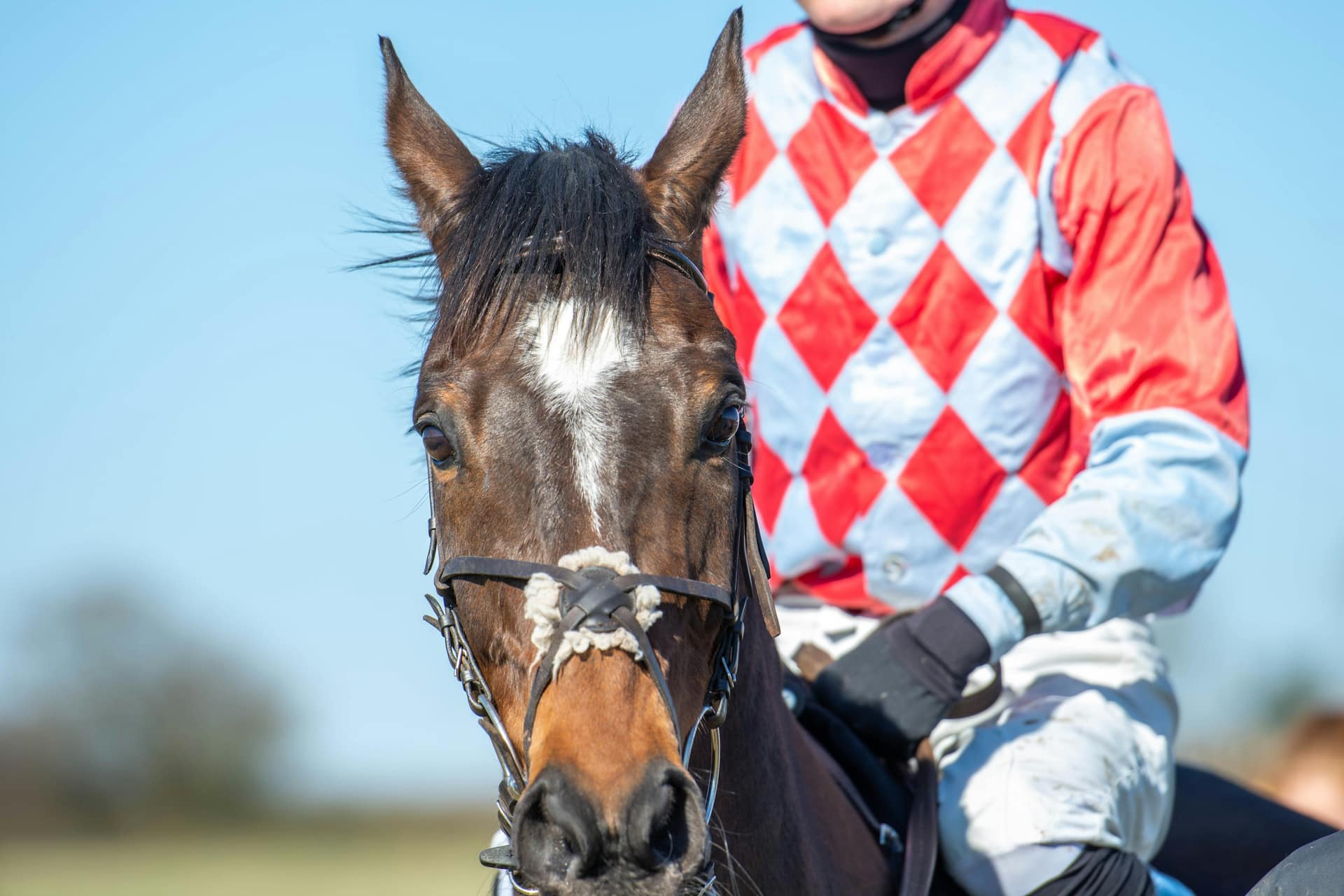
Racing has its own language. A racecard, a betting show or a tipster’s column can pack a dozen horse racing terms into a single line, and most of them are never explained. This glossary covers the words you will actually meet: the bets, the types of race, the horses and the people around them, the ground, the results and the slang you still hear in betting shops and on the rails. We have grouped the terms by subject rather than strictly A to Z, so related words sit together, and kept each definition short. Where another of our guides explains a term in depth, we give the short version here and link to it.
Betting terms
These are the horse betting terms you will see on a bet slip or hear at the course. If you want to check what a bet pays as you read, our bet calculator handles every bet type below.
Odds, prices and the market
| Term | Meaning |
|---|---|
| Odds (price) | The chance a bookmaker offers on a selection, shown as fractional (5/2) or decimal (3.5) odds. |
| Fractional odds | Profit over stake. 5/2 means £5 profit for every £2 staked. |
| Decimal odds | The total return for each £1, stake included. Used by the Tote and betting exchanges. 5/2 is 3.5. |
| Evens (even money, EVS) | Odds of 1/1, or 2.0 in decimal. Your profit equals your stake. |
| Odds-on | A price shorter than evens, such as 1/2, where the profit is smaller than the stake. |
| Odds-against | A price longer than evens, such as 3/1, where the profit is bigger than the stake. |
| Favourite | The horse with the shortest odds in the race. Joint-favourites or co-favourites share the top of the market. |
| Outsider (longshot) | A long-priced horse the market thinks is unlikely to win. |
| Short price / long odds | A short price means a likely winner and a small return; long odds mean the reverse. |
| Shortening / backed | A horse whose odds fall because money is coming for it. |
| Drifter | A horse whose odds lengthen because of a lack of support. |
| Springer | A horse whose price shortens dramatically. |
| Late money | Heavy backing for a horse in the final minutes before the off. |
| Over-round | The bookmaker’s margin. Add up the implied chances of every runner and the total is above 100%; the excess is the over-round. |
| Board prices | The odds shown by bookmakers on course. |
| Betting ring | The area of the racecourse where the on-course bookmakers stand. |
| Ante-post | Betting well before race day, often weeks or months ahead for the big races. Usually bigger odds, but your stake is normally lost if the horse does not run. |
| Fixed odds | You get the odds you took when the bet was placed, whatever happens to the price later. |
Our odds converter turns any fractional price into decimal odds and an implied chance, which is the quickest way to compare prices across formats.
SP and best odds guaranteed
SP stands for starting price: the official odds prevailing when the race starts. If you take “SP” instead of a fixed price, your bet is settled at whatever that turns out to be. Best odds guaranteed (BOG) is a bookmaker concession that pays you at the SP when it is bigger than the price you took; the conditions vary, so check them on the bookmaker’s site. Both are explained fully in our guide to what SP means in horse racing.
Single, each way and place terms
| Term | Meaning |
|---|---|
| Single (win bet, win only) | One bet on one horse to finish first. Also called a bet “on the nose”. |
| Each way (EW) | Two bets of equal stake: one to win and one to place. A £5 each way bet costs £10. |
| Place | Finishing in one of the paid places (usually the first two, three or four, depending on the race). |
| Place terms | The fraction of the win odds paid on the place part, usually 1/4 or 1/5. |
| Extra places | A bookmaker offer to pay on more places than the standard terms. |
The rules on how many places are paid in each type of race are set out in our guide to what an each way bet is, and our each way calculator shows the return on both halves.
Multiples and full-cover bets
A multiple combines several selections in different races, with the winnings of one carried on to the next. A double has two selections and a treble three, and all must win. An accumulator (acca) has four or more; see the acca calculator.
Full-cover bets combine a set of selections in every possible double, treble and bigger bet:
| Bet | Selections | Bets | Contains |
|---|---|---|---|
| Trixie | 3 | 4 | 3 doubles and a treble |
| Patent | 3 | 7 | A Trixie plus 3 singles |
| Yankee | 4 | 11 | 6 doubles, 4 trebles and a four-fold |
| Lucky 15 | 4 | 15 | A Yankee plus 4 singles |
| Canadian (Super Yankee) | 5 | 26 | Every multiple from doubles to the five-fold |
| Heinz | 6 | 57 | Every multiple from doubles to the six-fold |
| Goliath | 8 | 247 | Every multiple from doubles to the eight-fold |
Heinz and Goliath returns can be worked out on the main bet calculator.
Forecasts, tricasts and Tote bets
| Term | Meaning |
|---|---|
| Straight forecast (exacta) | Pick the first and second in the right order. |
| Dual forecast | Pick the first and second in either order. |
| Reverse forecast | Two straight forecasts covering both orders of the same pair. Our forecast calculator works out the cost and return. |
| Tricast (trifecta) | Pick the first three in the right order. Covered in our guide to how to bet a trifecta. |
| Tote | Pool betting, introduced in Britain in 1929. Stakes go into a pool and the dividend is shared among the winning tickets. |
| Dividend | What a Tote bet returns per unit staked. |
| Placepot | A Tote bet on picking a placed horse in each of the first six races at a meeting. See our placepot guide. |
| Jackpot | A Tote bet on picking the winners of a run of races at a meeting. |
Back, lay and the exchanges
To back a horse is to bet on it to win. To lay is to take the bet: a bookmaker lays every bet you place, which is why bookmakers are sometimes called layers. On a betting exchange such as the Betfair Exchange, punters can lay horses to each other, and the exchange charges commission on net winnings. All of this is explained in our guide to lay betting.
Rule 4, non-runners and deductions
A non-runner is a horse that was declared to run but is withdrawn. If it goes too late for the market to be re-formed, Tattersalls’ Rule 4 reduces the winnings on bets placed before the withdrawal, by a number of pence in the pound that depends on the withdrawn horse’s price. The stake is never reduced. Our Rule 4 calculator works out the deduction.
Nap and NB: what is a nap in horse racing?
A nap is a tipster’s best bet of the day: the one selection they are most confident about. Newspaper tipsters typically give a nap for the day’s racing, and many also give an NB, which stands for “next best”, their second most confident selection. So the short nap meaning is simply “the tipster’s strongest tip today”.
The word comes from the card game Napoleon, usually shortened to Nap. In the game, each player is dealt five cards and bids to win tricks; a bid of “nap” commits to winning all five. “Going nap” came to mean staking everything on one hand, and racing tipsters borrowed it for the selection they would put the most on.
Nap tables, which rank tipsters by their naps over a season, usually assume a £1 level stake on each nap. As a worked example, say a tipster’s nap wins at 5/2 and the NB loses. To a £1 stake each, the nap makes £2.50 profit, the NB loses £1, and the tipster is £1.50 up on the day. If the nap had been beaten too, the day would show a £2 loss. A nap is an opinion, not a guarantee, and many naps are short-priced favourites.
Bar, banker and other betting words
| Term | Meaning |
|---|---|
| Bar | In a betting show, the price of every horse not individually quoted. “4/1 bar two” means 4/1 for any horse except the first two named. |
| Banker | A selection a bettor or tipster thinks is very likely to win, often used as the fixed leg of a multiple. |
| Book | A bookmaker’s record of bets on a race. |
| Return | The total paid on a winning bet, stake included. |
| Punter | Someone who places a bet. |
| In-running | Betting on a race while it is being run. |
Types of race
Flat and National Hunt
British racing has two codes. Flat racing is run without obstacles, over distances from 5 furlongs to just over 2 miles 5 furlongs. National Hunt racing, officially called Jump racing, is run over hurdles or fences at distances from 2 miles up to about four and a half miles. A furlong is 220 yards, or one eighth of a mile, so a 5 furlong sprint is 1,100 yards and a mile race is 8 furlongs.
| Term | Meaning |
|---|---|
| Hurdle | A race over hurdles, the smaller obstacles on a jumps course. A horse that runs in them is a hurdler. |
| Chase (steeplechase) | A race over fences, which can include open ditches and water jumps. A horse that runs in them is a chaser. |
| Bumper | A National Hunt flat race: a Flat race run under Jump rules, usually over about two miles, used to educate young horses before they jump. |
| Point-to-point | Steeplechasing for amateur riders. |
| All-weather (AW) | Flat racing on an artificial surface rather than turf. |
| Sprint | A short Flat race, typically five or six furlongs. |
| Middle distance | Flat races from beyond a mile up to about 1 mile 6 furlongs. |
| Staying race | A Flat race of two miles or more. A staying chaser races over three miles or more over fences. |
| Minimum trip | The shortest race distance: 5 furlongs on the Flat, 2 miles over jumps. |
| Trip | Another word for the distance of a race. |
What is a maiden race?
A maiden is a horse that has not yet won a race. A maiden race is open only to such horses, so every runner is chasing its first win. Maidens are where most Flat horses start, and the form can be hard to read because many runners have little or no racing record. Once a horse wins, it is no longer a maiden and moves on to novice, handicap or higher-grade races.
Novice and juvenile races
A novice on the Flat is a horse in the early stages of its career; novice races are generally restricted to horses that have won no more than twice or have only run a few times. Over jumps the definition is different: a novice hurdler is a horse that had not won a hurdle race before the start of the current season, and it keeps that status until the season ends, however many races it wins. Novice chasers work the same way over fences.
A juvenile is a two-year-old, and juvenile races are for two-year-olds. Ages count from an official birthday: every thoroughbred in the Northern Hemisphere turns a year older on 1 January, whatever its real foaling date. A juvenile hurdler is the youngest category of jumper. A nursery is a Flat handicap for two-year-olds.
Handicaps, conditions, claiming and selling races
| Term | Meaning |
|---|---|
| Handicap | A race in which each horse carries a different weight, set by the official handicapper, to give every runner an equal chance. Explained in our guide to handicap horse races. |
| Conditions race | A race where extra weight is allocated by set conditions, such as age, sex and previous wins, rather than by rating. |
| Level weights | Every horse carries the same weight. |
| Weight for age | The official scale of weight allowances that lets younger horses race against older ones on fair terms. |
| Claiming race (claimer) | A race in which each horse’s weight depends on the price its connections put on it, and runners can be bought (“claimed”) for that price. |
| Selling race (seller, selling plate) | A low-class race after which the winner is offered at auction. A horse that runs in them is a selling plater. |
| Walkover | A race with only one runner. |
Race classes: Class 1 to Class 7
British races are graded in seven classes, from Class 1 at the top to Class 7 at the bottom. Classes 2 to 7 are mostly handicaps split into bands by official rating. Class 1 holds the best races in the calendar:
| Term | Meaning |
|---|---|
| Pattern races | The grading system for the most important races: Group 1, 2 and 3 on the Flat, and Grade 1, 2 and 3 over jumps. Group 1 and Grade 1 are the highest level. |
| Listed race | The level just below Group or Grade races. |
| Classic | One of the historic major Flat races for three-year-olds, such as the 2000 Guineas and the Derby. |
| Triple Crown | A series of three prestigious races for colts or for fillies. |
| Guineas | Shorthand for the 1000 Guineas and 2000 Guineas. |
The horse and its connections
The horse
| Term | Meaning |
|---|---|
| Thoroughbred | The breed of horse used for racing, registered in the General Stud Book kept by Weatherbys. |
| Foal | A horse from birth until the following 1 January. |
| Yearling | A one-year-old horse. |
| Colt | A young male horse, up to four years old. |
| Filly | A young female horse, up to four years old. |
| Mare | A female horse aged five or over. A broodmare is one kept at stud for breeding. |
| Gelding | A castrated male horse. |
| Stallion (entire) | A male horse used for breeding. An entire is any male that has not been gelded. |
| Sire | The father of a horse. |
| Dam | The mother of a horse. |
| Damsire | The sire of the dam: the horse’s maternal grandfather. |
| Hand | The unit for measuring height at the shoulder: four inches. |
| Sprinter / stayer | A horse best at the shortest distances, or at long distances. |
| Front-runner | A horse that tries to lead and stay in front for as long as possible. |
| Green | Immature or inexperienced; a green horse may run about or hang. |
| Backward | Not yet fully developed or fit. |
| Dark horse | A horse with more ability than it has yet shown. |
Headgear and equipment
| Term | Meaning |
|---|---|
| Blinkers | A hood with cups around the eyes that limits what the horse can see to the side and behind. |
| Visor | Like blinkers, but with a slit in each cup that allows some sideways vision. |
| Cheekpieces | Strips of sheepskin fixed to the side of the bridle. |
| Tongue tie | A strap tied around the tongue to stop the horse swallowing it during a race. |
| Silks (colours) | The jacket worn by the jockey, registered to the owner, which identifies the horse. |
| Weight cloth | A cloth with pockets for lead weights, placed under the saddle so the horse carries its allotted weight. |
Connections, jockeys and officials
Connections are the people behind a horse, chiefly the owner and the trainer. The trainer prepares the horse at the yard, and a stable’s runners together are its string. When a stable runs two horses in a race, its first string is the main chance and the second string the other.
| Term | Meaning |
|---|---|
| Apprentice | A young Flat jockey learning under a licensed trainer. |
| Conditional jockey | The Jump racing equivalent of an apprentice. |
| Claimer / allowance | A young or inexperienced rider who “claims” a weight allowance, typically 3lb, 5lb or 7lb, which reduces as they ride more winners. |
| Amateur | A rider who takes no fee, shown on the racecard with a title such as Mr or Miss. |
| Jocked off | Replaced by another jockey on a horse. |
| Steward | An official in overall charge of the meeting, including discipline. Stipendiary stewards are professional officials employed by the British Horseracing Authority (BHA). |
| Clerk of the course | The racecourse official responsible for the overall management of the raceday. |
| Clerk of the scales | The official who weighs riders before and after each race. |
| Judge | The official who declares the finishing order and the distances between horses. |
| Starter | The official who starts the race. |
| Handicapper | The official who sets ratings and the weights in handicaps. |
The going and the course
The going
The going is the condition of the racing surface, and every racecourse publishes an official going description. These horse racing terms matter for betting because many horses only show their best on certain ground. Britain uses seven official descriptions on turf and five on the all-weather:
| Turf (firmest to softest) | All-weather (fastest to slowest) |
|---|---|
| Hard | Fast |
| Firm | Standard to fast |
| Good to firm | Standard |
| Good | Standard to slow |
| Good to soft | Slow |
| Soft | |
| Heavy |
In Ireland, good to soft is called yielding. The GoingStick is a handheld penetrometer, designed by Cranfield University and TurfTrax, that measures how firmly the ground resists a probe; British courses have been required to publish its readings on raceday since 2009, alongside the official going. When rain softens the ground, horses that like it are said to want “cut in the ground”.
The course
| Term | Meaning |
|---|---|
| Left-handed / right-handed | A course run anti-clockwise or clockwise. |
| Home straight | The straight from the final bend to the winning post. |
| Back straight | The straight on the far side of the course from the stands. |
| The distance | An unmarked point 240 yards from the winning post. |
| Draw | A horse’s starting stall position in Flat races. On some courses a high or low draw is a real advantage. |
| Stalls | The starting gates used on the Flat. |
| Open ditch | A steeplechase fence with a ditch on the take-off side. |
| Paddock / parade ring | Where the horses are saddled and paraded before the race. |
| Headquarters | Newmarket, the traditional home of Flat racing. |
Results and form
The finish
| Term | Meaning |
|---|---|
| Under starter’s orders | The moment the race is about to start and the runners are under the starter’s control. |
| Off | The race has started. |
| Photo finish | A finish too close to call by eye, settled by the photograph. |
| Dead heat | A tie for a position. Bets on a dead-heated horse are normally settled by halving the stake at full odds. |
| Blanket finish | Several horses finishing so close together you could cover them with one blanket. |
| Stewards’ enquiry | A hearing held by the stewards into the running of a race. The placings can be changed afterwards. |
| Objection | A complaint lodged by a jockey against another runner over how the race was run. |
| Disqualification | A horse placed lower in the finishing order for breaking the rules. |
| Weighed in | The official announcement after the jockeys are weighed that confirms the result. For bookmakers, it settles the race. |
Winning distances
Margins between horses are measured in lengths and fractions of a length. In Britain the official margins, from smallest up, are nose, short head, head, short neck, neck, half a length, three-quarters of a length, then lengths. In Ireland a margin of more than 30 lengths is recorded as a “distance”, while in Britain margins are recorded up to 99 lengths.
Running and falling
| Term | Meaning |
|---|---|
| Pulled up | The jockey stops riding the horse before the finish and it does not complete the race. |
| Fell | The horse fell at an obstacle. |
| Unseated rider | The jockey came off without the horse falling. |
| Brought down | The horse was knocked over by another faller. |
| On the bridle | Running comfortably, still pulling against the bit. |
| Off the bridle | Being pushed along by the jockey. |
| Won on the bridle / hacked up | Won easily, without being asked for full effort. |
| Turn of foot | The ability to quicken in the closing stages. |
| Staying on | Finishing strongly, a sign of stamina. |
| One-paced | Unable to quicken at the end of a race. |
| Boxed in | Trapped behind other horses with no room to get out. |
| Non-trier | A horse deliberately prevented from running to its full ability, which breaks the rules. |
Form and ratings
Form is a horse’s record in previous races. On a racecard it is summarised in form figures: digits for finishing positions plus letters such as F (fell), P (pulled up) and U (unseated rider). An official rating is the BHA handicapper’s measure of a horse’s ability in pounds, and it decides the weight it carries in handicaps. A penalty is extra weight for a recent win, and a horse that is “well in” is well treated by the weights. Reading all of this properly is covered in our guide to how to read horse racing form.
Slang: horse racing terms from the betting ring
Racing slang grew up in the betting ring, much of it from tic-tac, the hand-signal language bookmakers used to pass prices along the course. Tic-tac men wore white gloves so their signs could be seen, and the system was a common sight on British racecourses until mobile phones replaced it around the turn of the century. Many of these horse racing terms slang words survive in betting shops and commentary.
The favourite and the outsiders
The jolly is the favourite. A rag is an outsider that the market gives little chance. A bismarck is a favourite the bookmakers expect to lose and are therefore happy to lay. A “sure thing” is a horse thought to have little chance of losing, which, as every punter learns, is not the same as a horse that cannot lose.
Odds slang
| Slang | Odds |
|---|---|
| Wrist | 5/4 |
| Bottle | 2/1 |
| Carpet | 3/1 |
| Burlington Bertie | 100/30 (10/3) |
| Cockle | 10/1 |
| Double carpet | 33/1 |
Burlington Bertie is rhyming slang for “a hundred to thirty”, the traditional way of saying 10/3. A £10 bet at Burlington Bertie returns £43.33: £33.33 profit (£10 x 10/3) plus the £10 stake, which is decimal odds of about 4.33.
Money slang
| Slang | Amount |
|---|---|
| Lady Godiva | £5 |
| Cock and hen | £10 |
| Pony | £25 |
| Bull’s eye | £50 |
| Ton | £100 |
| Monkey | £500 |
So “a monkey on the jolly” is £500 on the favourite, and “a pony each way” is £25 each way, £50 in total.
Everyday racing phrases
| Phrase | Meaning |
|---|---|
| Go through the card | Back or tip the winner of every race at a meeting. |
| Spread a plate | A horse loses or damages a shoe (racing plate) before the race. |
| Over the top | A horse past its peak for the season after too much racing or training. |
| At the post | All the runners have arrived at the start. |
| Going down | The horses are on their way to the start. |
For a fuller list from racing itself, the Jockey Club publishes a racing glossary that covers many of the same words, and our horse racing glossary is built to sit alongside it with the betting side explained. If you are new to all of this, our guide to how to bet on horses puts these words to work step by step.
Betting always carries a risk of loss and no tipster, system or staking plan can guarantee a profit. Only stake what you can afford to lose, and set a budget before you start. Gambling responsibly.
Frequently asked questions
The ones you meet first are the going (the ground conditions), the favourite, each way, SP (starting price), handicap, maiden, novice and the furlong, which is an eighth of a mile. Racecards add form figures, official ratings and headgear codes, and the betting ring adds its own slang.
The jolly is the favourite and a rag is an outsider. Odds have nicknames from tic-tac, such as bottle for 2/1 and carpet for 3/1. Money has them too: a pony is £25, a ton £100 and a monkey £500.
It is named after Napoleon, or Nap, a five-card trick-taking game. Bidding nap meant promising to take all five tricks, so going nap came to mean backing your judgement to the full. Tipsters adopted it for their most confident selection of the day.
Nap is a tipster's strongest selection of the day and NB is short for next best, the second strongest. Tipster tables usually record both to a notional £1 level stake so readers can see whether following them would have shown a profit.
A bismarck is a favourite that bookmakers believe will lose, so they are happy to take bets on it. It is the opposite of a banker, the selection a punter thinks is almost certain to win. Bookmakers are not always right, so a bismarck can still win.