What Is a Stewards' Enquiry in Horse Racing?
By the MyHorseBets team · Updated · 14 min read
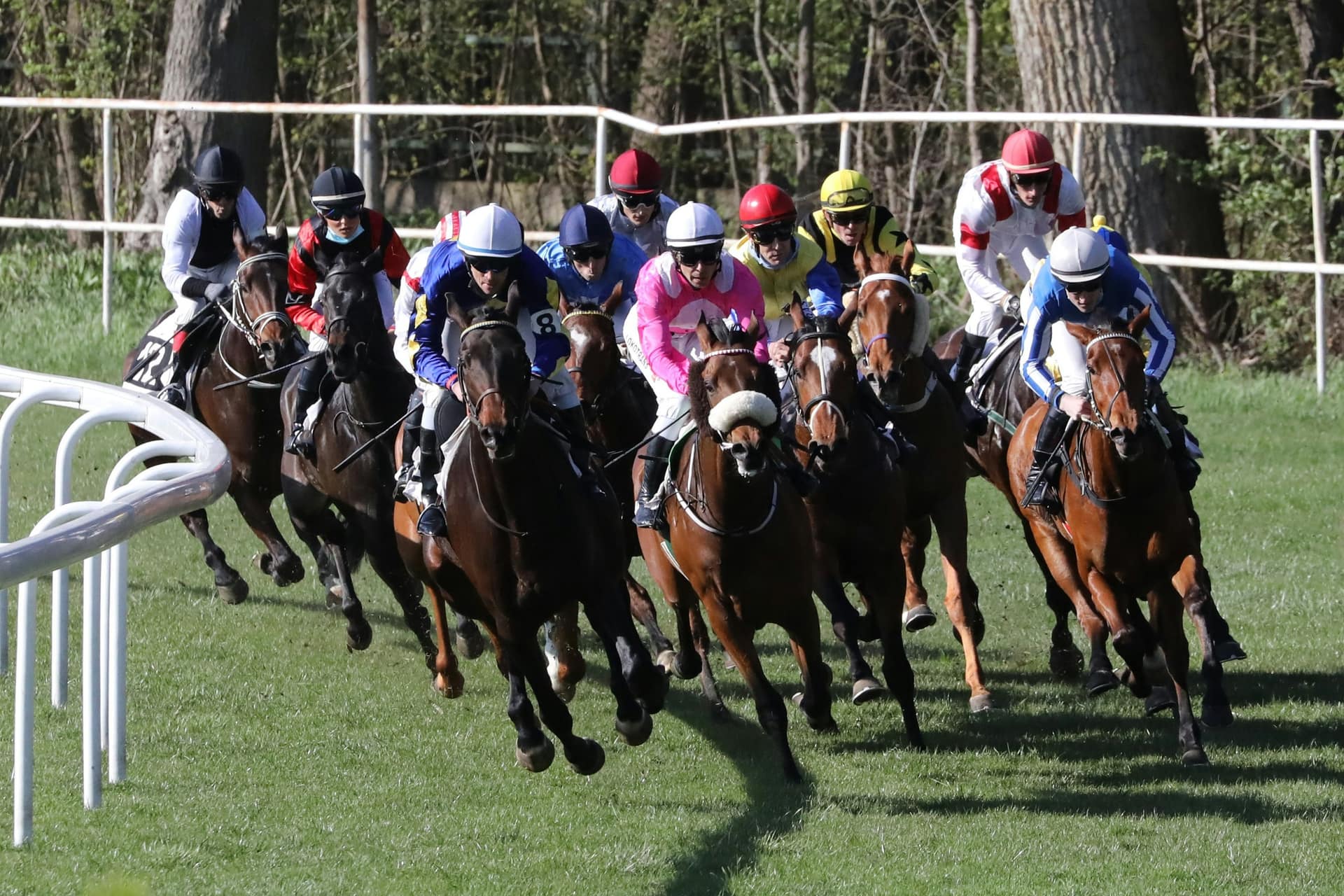
A stewards enquiry is a hearing held by the racecourse stewards straight after a race, to decide whether a rule was broken and whether the result should change. While it runs, the result is not final for betting. Once the stewards have decided and the “weighed in” announcement is made, bets are settled on that result, and anything that happens later (an appeal, a whip disqualification) does not change who gets paid.
That is the short answer. The rest of this guide covers who the stewards are, what triggers an enquiry, the test they use for interference, objections, the whip rules, and, most usefully for anyone with a bet on, how each type of bet is settled when placings are changed. There are worked examples in pounds throughout.
What Is a Stewards Enquiry?
The British Horseracing Authority (BHA) describes a stewards enquiry as “an enquiry held at the racecourse on a race day after any given race”. A panel, advised by a stipendiary steward, questions the jockeys and trainers involved about a possible breach of the Rules of Racing, and watches the race back from several camera angles.
What Is an Inquiry in Horse Racing?
“Inquiry” and “enquiry” mean the same thing here: an official review of something that happened in a race. British racing uses “enquiry”, as the BHA does on its own pages. Interference between horses near the finish is the best-known reason, but the stewards can also look at riding, the use of the whip, the weights carried, or whether a horse was run on its merits.
Where and When It Happens
The BHA’s FAQ on enquiries and disciplinary hearings explains that an enquiry is held at the racecourse in the interval between races. It normally lasts no longer than that interval, may be reconvened after the next race, but must be finished on the day. More serious or complex matters go to the BHA’s Disciplinary Panel in London, which can sit for hours or days.
How Common Are Enquiries?
They are routine. The BHA’s article on how races are officiated gives these figures:
| Year | Enquiries | Sanctions | Placings enquiries | Demotions |
|---|---|---|---|---|
| 2025 | 1,389 | 807 | 166 | 42 |
| 2024 | 1,304 | 821 | 185 | 27 |
So in 2025, only 42 of the 166 enquiries into placings ended with a horse being demoted. Most enquiries end with the result unchanged and, where a rider broke a rule, a ban or fine for the rider.
Who Are the Stewards?
The stewards are the officials responsible for making sure the Rules of Racing are followed on a raceday. In Britain they are run by the BHA, and the panel is a mix of paid professionals and a volunteer chair.
The Stewarding Panel
According to the BHA, the stewarding team at every British meeting is made up of a BHA Chief Steward, a Stewards’ Panel Chair, a BHA Steward, a BHA Assistant Steward and a BHA Raceday Assistant. The voting panel is the Chief Steward, the Panel Chair and one other BHA Steward. The Panel Chair is a volunteer; the others are full-time BHA employees. In older guides you will see the paid officials called stipendiary stewards, a term the BHA still uses.
What the Stewards Watch
The BHA says the panel has at least five camera angles of each race: head-on, side-on, close-up side-on and two remote cameras covering the back straight and the rear of the home straight. On the high-definition monitors in the stewards’ room, as many as four angles can play at once.
Stewards in Ireland
In Ireland the regulator is the Irish Horseracing Regulatory Board (IHRB), which publishes its daily enquiries online, alongside post-race reports made by trainers and riders. In Britain, the BHA publishes stewards’ reports on its website and posts enquiries live on its @BHAStewards account.
What Triggers a Stewards Enquiry?
The stewards can call an enquiry themselves, or one can follow an objection. The reasons fall into a few groups.
Interference
Bumping, crossing or squeezing another horse is what the placings enquiries in the table above are about. Interference doesn’t need contact: the BHA’s interference guidance notes that being taken off your intended line also counts.
Riding Offences and the Whip
Even when the result stands, the stewards can punish a rider for careless or improper riding, or for misuse of the whip. Under the BHA’s whip rules, introduced in early 2023, the whip may be used a maximum of six times in a Flat race and seven times in a Jump race. A horse can be disqualified when the whip has been used four or more times above that permitted level.
Weights and the Weigh-In
After the race, every jockey weighs in. The BHA’s Rules of Racing say a jockey’s weight at weighing in must not be more than 1lb less, or 2lb or more heavier, than at weighing out. Cartmel Racecourse’s guide to the procedure says that if a rider weighs in more than 1lb light, the Clerk of the Scales lodges an objection and the stewards automatically hold an enquiry.
Running on Merits
The stewards also look at whether every horse was given a fair chance. The BHA’s rule has long been that “every horse which runs in a race shall be run on its merits”, and jockeys and trainers must report anything that may have affected a horse’s performance. These cases rarely change the result on the day; they usually lead to penalties. Our guide on whether horse racing is fixed covers integrity in more depth.
How the Stewards Decide on Interference
This is the part that matters for bets, because it decides whether placings change. Britain and Ireland use what are known as “Category 1” rules. As the Racing Post put it when France adopted them in 2017, under Category 1, “if a horse causes interference but does not improve its position in relation to the horse suffering the interference, the placings will remain unaltered.” Under Category 2, any interference was liable to lead to demotion; the same article names the US as the main exception to Category 1 among major racing countries.
The Test: Did the Interference Improve the Placing?
The BHA’s Rules of Racing (we read the 2021 edition, version 4.4) put the question plainly: “the Stewards have to decide whether the sufferer would have beaten the interferer but for the interference.” The guidance repeats that “demotion only occurs if the horse causing the interference has improved its placing as a result of that interference.” If the panel can’t make up its mind, the result stands.
What the Panel Weighs Up
The same guidance lists the questions the panel asks: where the incident happened relative to the winning post, how the horses were going at the time, how much momentum and ground the sufferer lost, whether it might have finished in front with a clear run, and how easily the interferer won. Its guiding principles include:
- Benefit of the doubt goes to the horse that finished in front.
- Distance matters: the further from the winning post, the less likely the result changes.
- Close finishes: a reversal is more likely where there is only a nose between the horses.
- Demote, don’t promote: “in amending the placings you are demoting the interferer not promoting the sufferer.”
Placed Behind, or Disqualified Altogether
Usually the interferer is placed directly behind the horse it hampered, and everyone else keeps their position. A full disqualification is reserved for dangerous riding, which the BHA defines as causing serious interference, such as a horse or rider falling or very nearly falling, or being seriously hampered, for example pushed against the rail. When the stewards find dangerous riding, the result must be disqualification of the horse that caused it.
When the Order Gets Complicated
In 2019 the BHA had to correct a result at Chester after placing an interferer behind only one of two horses that had dead-heated for second. The rules require the interferer to be placed behind the horse it hampered, but don’t allow a dead heat to be split unless there was interference between those two, so the horse went to fourth behind both. Our guide to dead heat rules explains how dead heats are settled.
Objections and the On-Course Announcements
Who Can Object
Under the BHA’s Rules of Racing, an objection can be made by a “Qualified Person”: BHA officials (other than the stewards), or the owner, jockey or trainer of a horse in the race, or their representative. It must be brought to the stewards’ attention as soon as reasonably practicable and in any event before the “weighed in” announcement. A valid objection means the stewards must hold an enquiry. An objection made later, to the BHA itself, goes to the Disciplinary Panel and doesn’t affect betting.
What You Hear on the Course
The words you hear on course and on TV typically run in this order, though the exact phrasing varies:
| What you might hear | What it means | Can you be paid yet? |
|---|---|---|
| Stewards’ enquiry | The stewards are reviewing the race | No, keep your slip |
| Objection | A rider, trainer or official has formally objected | No, keep your slip |
| Result stands | The enquiry or objection changed nothing | Not until weighed in |
| Placings amended / reversed | One or more horses moved down | Not until weighed in |
| Weighed in | Weighing is complete and the result is confirmed | Yes |
The BHA’s Rules of Racing say “weighed in” can only be announced once weighing in has finished, the judge has confirmed the placings and any objections have been decided.
Why You Keep Your Betting Slip
The BHA’s report into a 2015 incident at Ascot, involving the favourite Speculative Bid, criticised the course for announcing an enquiry without “the traditional klaxon being sounded to inform racegoers and bookmakers that all betting slips should be retained”. The same report shows what happens when “weighed in” is given too early: the signal went out before the enquiry had finished, and the later decision to declare the horse a non-runner could not change the result for betting purposes.
How Bets Are Settled After a Stewards Enquiry
The Weighed-In Rule
Tattersalls Committee’s Rules on Betting say: “Other than ‘first past the post’ bets, all bets will be settled according to the result as announced at the ‘Weighed-In’.” Rule 7 adds: “Changes to the result made after the ‘Weighed-In’ announcement do not affect the result of the race for betting purposes.” Sky Bet’s racing rules say the same thing in their own words: bets are settled on the official result at the weigh-in, and any change after that point will not count, “including when a Horse is disqualified due to breaching the BHA’s whip rules.”
Appeals Don’t Reopen Bets
Anyone found in breach by the stewards can appeal to the BHA’s Disciplinary Panel, and the panel can reverse a decision. The 2015 St Leger is the best known case. According to Wikipedia, Simple Verse crossed the line a head in front of Bondi Beach, but after a lengthy enquiry the placings were reversed and the race awarded to Bondi Beach. Her connections appealed, and on 23 September the decision was reversed in Simple Verse’s favour. Under the Tattersalls rule above, bets had already been settled on the weighed-in result with Bondi Beach the winner, and the appeal didn’t change that.
The BHA’s whip rules work the same way. Whip disqualifications are decided by the Whip Review Committee away from the raceday, so, in the BHA’s words, “results of races are not affected for betting purposes.”
First Past the Post Concessions
Some bookmakers go further than the rules and pay on the horse that crossed the line first, even if it is demoted. This is a concession, not a rule. Sky Bet’s first past the post rules, for example, say it “will pay out for the horse which crosses the line first, even if they are later disqualified or downgraded in the race.” Bets on the horse awarded the race are paid anyway, because that is the official result. Sky Bet’s exceptions include horses disqualified for failing to weigh in or for taking the wrong course, official corrections by the judge before the weigh-in, void races, and bets relying on Tote dividends such as the Placepot. Terms differ between bookmakers and some exclude certain races, so read your own bookmaker’s rules rather than assuming.
A First Past the Post Example
You have £10 to win on Horse A at 3/1. It passes the post first but is placed second after an enquiry, and Horse B, at 5/1, is awarded the race.
- Official result only: your bet loses. Return £0.
- With a first past the post concession: you are paid as a winner. £10 x 3 = £30 winnings, plus the £10 stake, for a £40 return.
- Someone who backed Horse B for £10 is paid either way: £10 x 5 = £50 winnings, plus £10, a £60 return.
Each Way Bets and Forecasts When Placings Change
A demotion doesn’t only move the winner. It shifts every horse behind it, which is where each way bets and forecasts are won or lost.
Each Way: Demoted From Second to Third
Take an eight-runner non-handicap, so three places at 1/5 the odds (see what an each way bet is for place terms). You have £5 each way, £10 in total, at 6/1. Your horse finishes second but is placed third after an enquiry.
- Win part: loses, as it would have done anyway.
- Place part: 6/1 x 1/5 = 6/5. £5 x 6/5 = £6 winnings, plus the £5 stake, a £6 + £5 = £11 return.
The demotion costs you nothing here: second and third pay the same place odds. Your total return is £11 on a £10 stake.
Each Way: Demoted From Third to Fourth
Same race and bet, but your horse finished third and is demoted behind a horse it hampered, to fourth. Only three places are paid, so the place part loses too. Return £0, and the full £10 stake is lost. With bets settled on the weighed-in result, the horse that moved up to third is the one that pays place money.
Each Way: Promoted to First
Now the reverse. You have £5 each way at 4/1 on a horse that finished second, and the winner is demoted behind it.
| Part | Odds | Winnings | Return |
|---|---|---|---|
| Win (£5) | 4/1 | £20 | £25 |
| Place (£5) | 4/1 x 1/5 = 4/5 | £4 | £9 |
| Total (£10 staked) | £24 | £34 |
Had the result stood, only the place part would have paid: a £9 return. You can check any of these figures in our each way calculator, or settle multiples with the bet calculator.
Forecasts and Tricasts
Forecasts need the exact order, so an enquiry between the first two can flip a winning straight forecast into a loser, and the other way round. A reverse forecast covers both orders for twice the stake, which is why it survives a reversal of the first two. Our forecast calculator works out the returns once the computer straight forecast dividend is known.
Famous Stewards Enquiries
The 1913 Derby
According to Wikipedia, Craganour crossed the line first in a blanket finish at Epsom, and the judge announced him the winner. An objection was then lodged, not by a rival jockey, as was customary, but by the stewards themselves, who disqualified Craganour for failing to keep a straight course. The race was awarded to Aboyeur at 100/1, still one of the most debated results in racing.
Big Days Are Not Exempt
The same Rules of Racing apply at the Cheltenham Festival and the Grand National as at any midweek meeting, and the “weighed in” result is still the one your bookmaker settles. On a big day, though, first past the post concessions are worth a closer read, because each bookmaker sets its own exclusions. For the vocabulary you’ll hear on course, from “objection” to “weighed in”, see our horse racing terms glossary.
Frequently asked questions
It is an official review of a race by the stewards, called an enquiry in Britain and Ireland. They watch replays, question the riders involved and decide whether a rule was broken. The result can stay the same, placings can be reversed, or a horse can be disqualified.
Bookmakers hold off paying until the stewards decide and weighed in is called. Your bet is then settled on the confirmed placings. If your horse is moved down, you lose any position it dropped, unless your bookmaker pays first past the post on the original winner.
In Britain, the BHA publishes stewards' reports on its website and posts live updates on its @BHAStewards account on X. Irish enquiries appear on the IHRB's daily enquiries page. Racecourse commentary and TV coverage also announce the outcome before weighed in.
Usually a few minutes for a straightforward interference case. The BHA says enquiries can't start until the riders are back in the weighing room, and some jockeys have to weigh out for the next race first. A panel can reconvene after the next race but must finish on the day.
Yes, but your bet is not affected. Appeals, objections lodged with the BHA and whip disqualifications are all decided after weighed in, and Tattersalls rules say later changes do not alter the result for betting. A winning slip stays a winner, and a losing one stays a loser.